Category Archives for Affiliate Marketing

How to Drive Traffic to Your Affiliate Links for Free

How to Drive Traffic to Your Affiliate Links for Free

Introduction

Here's a number that should make every beginner affiliate marketer pay close attention: studies consistently show that the majority of new affiliate marketers who use paid advertising lose money before they ever turn a profit — with many burning through $500 to $2,000 testing ads before earning their first meaningful commission. I was almost one of those statistics. In my early affiliate marketing days I spent $340 on Facebook ads over three weeks, earned $47 in commissions, and felt like the biggest idiot on the internet. The worst part? A week after I stopped running those ads, I discovered free traffic strategies that outperformed everything I'd paid for — and kept growing while I slept.

That experience completely changed how I think about affiliate marketing traffic. Paid traffic is essentially renting an audience — the moment you stop paying, the traffic stops too. Free traffic, done right, is building an asset — a YouTube video, a Pinterest pin, a well-ranked blog post — that keeps delivering visitors and affiliate link clicks for months or years after you created it. The compounding nature of organic, free traffic is one of the most powerful forces in online business, and it's available to every affiliate marketer regardless of budget.

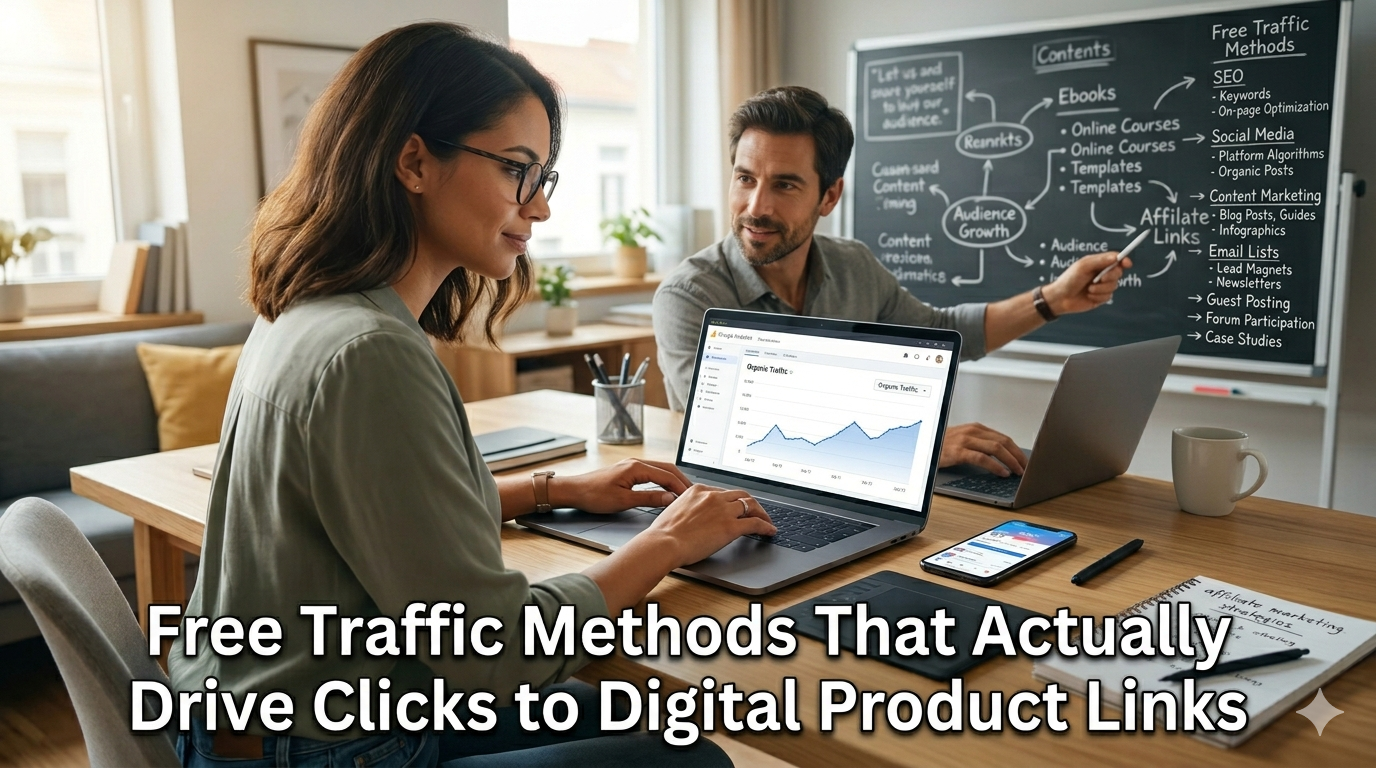
This guide covers every major free traffic strategy worth your time in 2026 — SEO, Pinterest, YouTube, TikTok, email marketing, Quora, Reddit, Facebook Groups, and content repurposing. For each one I'll explain exactly how it works for affiliate marketing specifically, what results you can realistically expect, and how to get started without spending a dollar. By the end you'll have a complete free traffic playbook to apply to your affiliate business. Let's build something that grows while you sleep.


Why Free Traffic Is the Smartest Strategy for Affiliate Marketing Beginners

Before we get tactical, let me make the case for free traffic more explicitly — because I think a lot of beginners underestimate how powerful it is relative to paid alternatives, especially at the stage when they're just starting out.

The fundamental problem with paid traffic for beginners is the skill gap between where you are and where you need to be to run profitable ad campaigns. Running paid Facebook, Google, or TikTok ads profitably requires deep knowledge of audience targeting, creative testing, bid strategy, conversion tracking, and landing page optimization — skills that take real time and real money to develop. Beginners who jump straight into paid traffic are essentially paying for an education while simultaneously hoping to profit. That combination rarely works. The more common outcome is a depleted budget and a demoralized marketer who concludes affiliate marketing doesn't work — when in reality, the strategy was just wrong for their stage.

Free traffic strategies have a different and much more beginner-friendly risk profile. The cost of a failed SEO article is the time it took to write it — not $500 in ad spend. The cost of a Pinterest pin that doesn't drive clicks is fifteen minutes of Canva work — not a blown campaign budget. This forgiving cost structure means beginners can experiment, learn, and iterate without the financial pressure that makes paid traffic so stressful in the early stages.

The compounding nature of free traffic is its defining superpower. A blog post that ranks on Google today will still be receiving traffic two years from now without any additional investment. A YouTube video that ranks for a search term generates views and affiliate link clicks indefinitely. A Pinterest pin can circulate and drive traffic for years after it was created. Paid traffic, by contrast, is linear — you spend $100, you get $100 worth of traffic, and when you stop spending the traffic stops immediately. The difference in long-term value between these two approaches is enormous.

Realistic expectations matter here too. Free traffic strategies take time to build momentum — typically three to six months before SEO delivers meaningful results, weeks to months before social platforms build meaningful audiences. If you need income immediately, free traffic alone may not be the answer. But if you're building for the medium and long term — which is the only realistic approach to serious affiliate marketing anyway — free traffic is not just viable, it's genuinely the smartest foundation you can build.


SEO — The Most Powerful Free Traffic Strategy for Affiliate Marketers

Search engine optimization is the cornerstone of almost every successful long-term affiliate marketing business, and for good reason. When your content ranks in Google for relevant search terms, you receive a continuous stream of targeted visitors who are actively looking for exactly what you're writing about — buyers in research mode, people comparing products, searchers looking for solutions to problems your affiliate products solve. That intent alignment between searcher and content is what makes SEO traffic convert so well to affiliate commissions.

Keyword research is where effective SEO begins, and you absolutely don't need paid tools to do it well as a beginner. Google Search autocomplete gives you real search queries directly from Google's own data — type your topic into the search bar and observe every autocomplete suggestion, then scroll to the bottom of results for “related searches.” The “People Also Ask” box within search results is another goldmine of content ideas representing questions real searchers are asking. Google Keyword Planner (free with a Google account) provides search volume ranges and competition indicators. And Ubersuggest's free tier gives you keyword difficulty scores that help you identify realistically rankable targets.

The keyword strategy that works best for new affiliate sites is aggressive targeting of long-tail, low-competition keywords — specific search phrases of four or more words that have lower competition than broad terms but very clear searcher intent. “Best standing desk for home office under $300” is a long-tail keyword. “Standing desks” is not. The long-tail version has far less competition, attracts a searcher who is clearly close to a purchase decision, and is realistically rankable by a new site within months. The broad version is dominated by established authority sites and could take years to crack. Build your early content library almost entirely around long-tail keywords and your SEO results will arrive meaningfully faster.

On-page SEO fundamentals every affiliate marketer needs to apply consistently include using your target keyword naturally in your title, first paragraph, at least one H2 heading, and throughout the content where it fits. Writing a compelling meta description that includes the keyword and entices clicks. Using internal links to connect related articles within your site. And ensuring your content thoroughly answers the search query — Google's helpful content updates increasingly reward depth and genuine usefulness over surface-level coverage.

Building topical authority is the meta-strategy that supercharges individual article rankings. When your website covers a specific niche topic comprehensively — multiple articles addressing different angles, questions, and sub-topics — Google recognizes your site as an authority on that topic and gives your content preferential ranking treatment. This is why publishing consistently within a focused niche beats publishing sporadically across multiple unrelated topics every single time.


Pinterest — The Underrated Free Traffic Goldmine

I'll say it plainly: Pinterest is the most underrated free traffic source in affiliate marketing, and I'm convinced that most beginners who dismiss it haven't actually tried it properly. The platform's unique position as a visual search engine — rather than a traditional social network — gives Pinterest traffic characteristics that more closely resemble Google than Instagram or TikTok. People go to Pinterest actively searching for ideas, solutions, and product recommendations. That active search intent translates into affiliate link clicks and conversions at rates that casual social media browsing simply doesn't match.

Understanding how Pinterest actually works changes how you approach it completely. Users type search queries into Pinterest's search bar — “best home office setup ideas,” “healthy meal prep for beginners,” “budget travel tips Europe” — and Pinterest surfaces relevant pins from across the platform regardless of when they were created or how many followers the creator has. This means a pin you create today could be surfaced to a searching user two years from now — giving Pinterest content the same long-tail traffic longevity that a well-ranked blog post has. No other major social platform behaves this way.

Creating affiliate-friendly pins that drive meaningful traffic requires attention to three elements: visual quality, keyword optimization, and clarity of value proposition. Your pin image should be vertical (the optimal 2:3 ratio for Pinterest display), visually appealing, and include a clear text overlay that communicates exactly what the viewer will find when they click. Create these images for free in Canva using their Pinterest pin templates — the quality you can achieve with Canva's free plan is entirely sufficient for effective pins. Your pin title and description should include the specific keywords your target audience is searching for — treat them like mini SEO meta descriptions, not social media captions.

Posting frequency matters significantly on Pinterest. The algorithm rewards consistent, regular posting over irregular bursts of content. Aim for a minimum of five to ten pins per day when you're building momentum — which sounds overwhelming until you realize that pinning other creators' content alongside your own is perfectly acceptable and actually encouraged. Tools like Tailwind (which has a free tier) can help you schedule pins in bulk and post consistently without logging in daily. Within your own content, create multiple pins for each piece of affiliate content you want to promote — different images, different titles, different descriptions — to maximize the chances of reaching your target audience through different search queries.

The best niches for Pinterest free traffic include home decor and interior design, food and recipes, fitness and wellness, personal finance and budgeting, DIY and crafts, fashion and style, travel, parenting, and beauty. If your affiliate niche falls within or adjacent to any of these categories, Pinterest deserves to be one of your primary free traffic investments from day one.


YouTube — Free Traffic Through Video Search

YouTube is the second largest search engine in the world — processing over three billion searches per month — and it remains one of the most powerful free traffic sources available to affiliate marketers who are willing to invest in video content. The trust that video builds with audiences is unmatched by any text-based medium, and the combination of YouTube search rankings and Google search rankings (YouTube videos regularly appear in Google results) gives video content double the search engine exposure of a blog post alone.

The types of affiliate content that perform best on YouTube are fundamentally the same formats that work on a blog — reviews, comparisons, tutorials, and best-of recommendations — just delivered through video rather than text. A detailed product review video targeting a specific search query like “Ahrefs vs Semrush honest review 2026” can rank in both YouTube and Google search, driving a steady stream of highly targeted viewers to your affiliate links in the video description for months or years after you posted it. That evergreen traffic potential is what makes YouTube worth the higher content creation investment compared to writing.

YouTube SEO for beginners is more accessible than most people expect. Your video's title is the most important SEO element — include your target keyword naturally and make it compelling enough to earn clicks. Your description should include a keyword-rich summary of the video content, your affiliate links (clearly labeled and disclosed), and timestamps for longer videos. Tags, while less powerful than they once were, should include your main keyword and related terms. The thumbnail is your most important click-through rate factor — invest time in creating clear, visually distinct thumbnails even with free tools like Canva, because your click-through rate directly influences how widely YouTube distributes your video.

The equipment barrier for YouTube is dramatically lower than most beginners assume. Modern smartphones shoot in 4K and the audio quality with a basic lapel microphone — available for under $20 — is perfectly adequate for getting started. Natural window lighting beats expensive ring lights for authentic-feeling video quality. CapCut and DaVinci Resolve are both free video editing tools that are capable enough for professional-quality affiliate marketing videos. The technical barrier is not the bottleneck — consistency and content quality are the real determinants of YouTube affiliate marketing success.


TikTok Organic — Fast Free Traffic for New Affiliates

TikTok's organic reach in 2026 remains extraordinary by the standards of any established social platform — and it represents a genuine democratization of audience access that affiliate marketers should be leveraging. On Instagram or YouTube, building a meaningful following from zero typically takes many months of consistent posting. On TikTok, a single well-crafted video can reach tens of thousands of viewers in the first 24 hours regardless of your follower count, purely on the strength of its engagement rate. That immediate reach potential is unmatched anywhere else in the social media landscape.

The affiliate content formats that drive the strongest results on TikTok center around authenticity, specificity, and demonstrated value. Product demonstrations that show real results in a compelling way perform exceptionally well — “I tried this $30 Amazon product for 30 days and here's what happened” is a format that practically writes its engagement. “Things I wish I'd known before buying X” captures research-mode viewers who are genuinely close to a purchase decision. Problem-solution videos — showing a specific frustrating problem and then demonstrating exactly how a product solves it — combine entertainment with utility in a way that drives both engagement and affiliate clicks.

The mechanism for driving traffic to affiliate links on TikTok involves directing viewers to your bio link — either directly to an affiliate product page or to a Linktree page that lists your primary affiliate recommendations. In your video content, the call to action is typically verbal — “link in my bio if you want to check it out” — delivered naturally within the content rather than as a hard promotional pitch. The softer and more genuine the recommendation feels, the better it converts on TikTok's authenticity-sensitive audience.

Consistency is the operational key to TikTok growth. The algorithm rewards accounts that post regularly and gives new content repeated distribution opportunities as it tests different audiences. Posting one to three times daily is the ideal cadence for rapid growth — achievable if you batch your content creation rather than trying to produce fresh content every single day. The most efficient approach is dedicating one day per week to filming ten to fifteen short videos, then scheduling or manually posting them throughout the week.


Email Marketing — The Highest Converting Free Traffic Source

Email marketing is technically free — the primary cost is your time and the modest investment in an email platform, most of which have generous free tiers — and it consistently outperforms every other traffic source in affiliate marketing when it comes to conversion rates. The reason is simple and profound: email subscribers have explicitly chosen to receive communications from you, they know who you are, and they trust your recommendations enough to have given you access to their inbox. That warm, opted-in audience relationship converts to affiliate sales at rates that dwarf cold organic traffic from search or social.

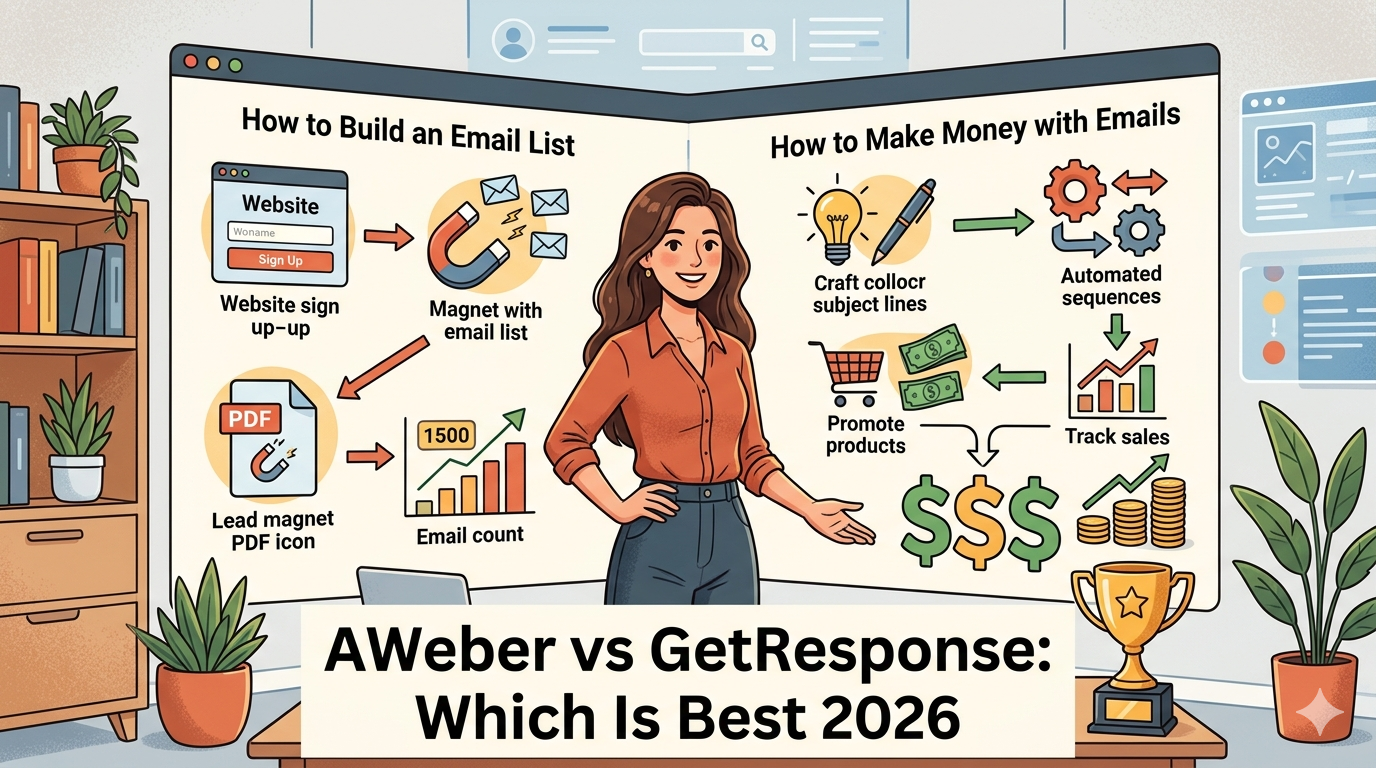
Building an email list from scratch with zero budget is entirely achievable using free tools. ConvertKit (Kit) and Mailchimp both offer free plans that support several hundred to a thousand subscribers — more than enough to generate meaningful affiliate commissions while you build. Create a simple lead magnet — a free checklist, resource guide, template, or short email course relevant to your niche — and offer it in exchange for email sign-ups. Your lead magnet doesn't need to be elaborate: a one-page PDF created in Canva or a five-day email course delivered automatically through your email platform is sufficient to incentivize sign-ups if the topic is genuinely valuable.

The email sequence structure that works best for affiliate marketing starts with a welcome email that delivers the promised lead magnet and introduces who you are and what value subscribers can expect. Subsequent emails in the first week focus on genuinely helpful content — tips, resources, insights — that establishes your expertise and builds trust before any affiliate promotion appears. Introduce your first affiliate recommendation in the third or fourth email, framed as a tool or resource that genuinely solves a problem your audience has — not as a sales pitch but as a helpful suggestion from someone who uses and values it.

Growing your email list consistently requires embedding opt-in opportunities across every piece of content and platform presence you have. Add sign-up forms to your website or blog, include your lead magnet link in your social media bios, mention your email list in YouTube video descriptions, and promote it periodically in your social content. Every subscriber you add compounds the value of your list — a list of 1,000 engaged subscribers in a buying-intent niche can generate hundreds of dollars in monthly affiliate commissions from a single well-crafted promotional email.


Quora and Reddit — Answer-Based Free Traffic Strategies

Quora and Reddit are two of the most targeted and most underutilized free traffic sources in the affiliate marketer's toolkit — and I genuinely mean that. Both platforms are filled with people actively asking specific questions in your niche, many of which represent buying-intent searches that map perfectly to your affiliate content. The traffic you can drive from a single well-written Quora answer or genuinely helpful Reddit comment is modest individually but compounds beautifully with consistent effort.

Quora works through a question-and-answer format where detailed, helpful answers rise to the top through upvotes and views. Find questions in your niche by searching Quora for your topic keywords, then filter for questions with high view counts and recent activity. Write genuinely comprehensive, helpful answers that provide real value independent of any affiliate link or content reference — and then, where it's genuinely relevant and adds value, reference your content or recommend a product. The key word is genuinely — answers that feel like thinly veiled promotions get downvoted and removed. Answers that feel like expert guidance from someone who actually knows the topic get upvoted, shared, and continue receiving views for years. Some of my Quora answers have been viewed hundreds of thousands of times and driven consistent traffic to my affiliate content for over two years.

Reddit requires an even more community-native approach because Reddit users are exceptionally sensitive to promotional intent and will call out and downvote anything that feels like spam or self-promotion. The right approach is to genuinely participate in niche subreddits — answer questions helpfully, contribute to discussions substantively, build a reputation as a knowledgeable community member over weeks and months. Then, when you share your content or make a product recommendation, it lands as trusted advice from a known community voice rather than suspicious promotional material. Reddit traffic, when it comes, is highly targeted and converts well because the visitors already trust you from community context.


Facebook Groups and Online Communities

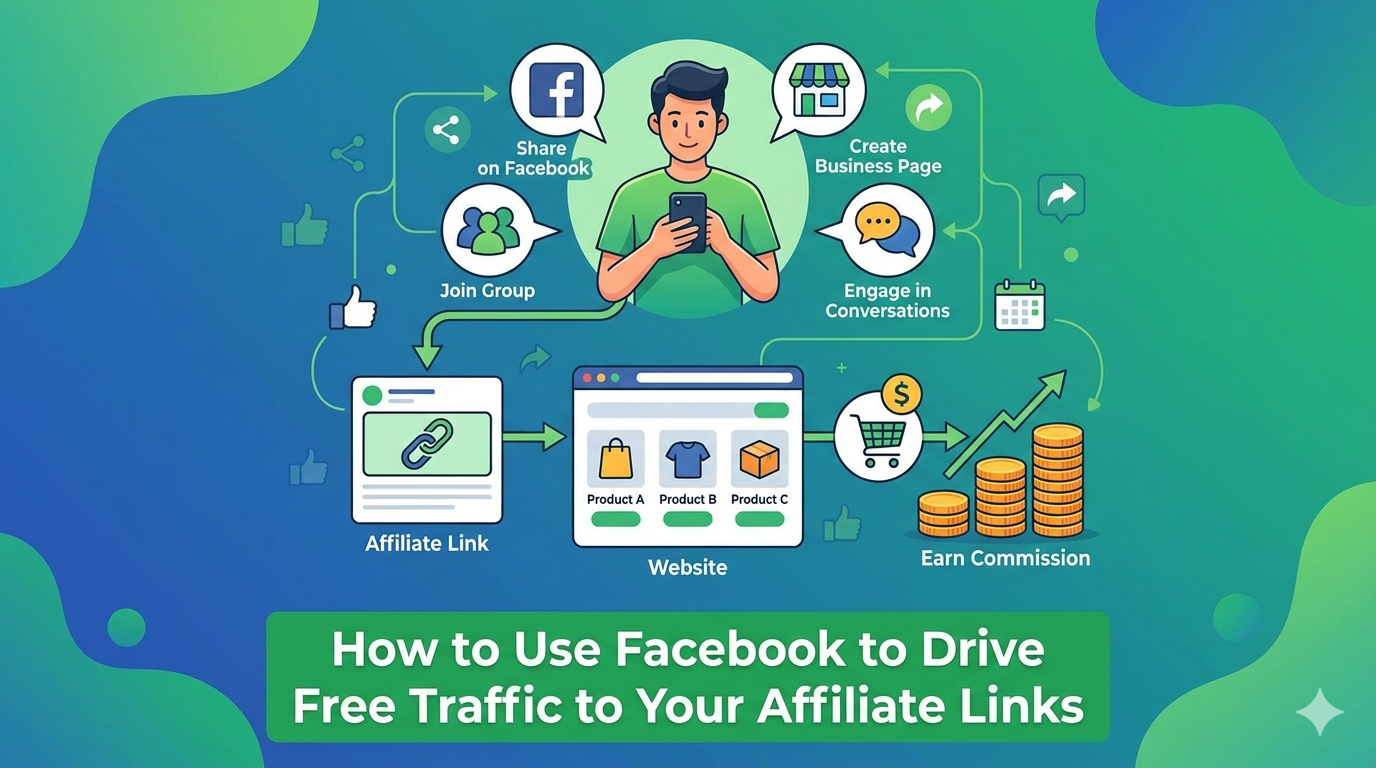
Facebook Groups represent one of the most overlooked free traffic opportunities for affiliate marketers — particularly in niches where passionate communities naturally gather to share information, ask for recommendations, and support each other. The targeted, high-trust nature of group audiences makes them remarkably effective for converting affiliate recommendations, even with relatively small engagement numbers.

There are two distinct approaches to Facebook Group traffic for affiliate marketers. The first is building your own group around your niche topic — creating a community that you moderate and grow from scratch. This approach takes longer to generate traffic but gives you the most control and the most valuable audience relationship. As group creator and manager, you have the natural authority to recommend products and share affiliate content in a way that feels genuinely helpful rather than promotional. A well-managed group of even a few hundred engaged members in a buying-intent niche can generate consistent affiliate commissions through regular helpful content that naturally incorporates product recommendations.

The second approach is participating meaningfully in existing groups — finding the most active groups in your niche, joining them, and contributing genuine value over time before ever referencing an affiliate link. This builds community reputation and creates organic opportunities to recommend products when questions arise that your affiliate offers can answer. The golden rule in groups you don't manage is always lead with value — answer questions thoroughly, share useful information freely, and let the relationship and trust build before any promotional element enters the picture.

Beyond Facebook, other online communities worth engaging in for free affiliate traffic include niche forums, Discord servers, Reddit communities (as covered above), and platform-specific communities on sites like Stack Exchange for tech niches. The common thread across all successful community-based traffic strategies is genuine, sustained value contribution rather than link dropping — the former builds the kind of trust that drives affiliate sales, the latter gets you banned.


Content Repurposing — Multiplying Your Free Traffic Efforts

Content repurposing is the strategy that transforms every piece of content you create from a single-platform asset into a multi-platform traffic driver — and it's one of the most efficient free traffic multipliers available to affiliate marketers who are already creating content regularly.

The concept is simple: a single piece of high-quality content — let's say a 2,000-word blog post reviewing the best budget home office chairs — contains enough material and insight to fuel multiple pieces of content across different platforms. That blog post can become a YouTube video script, five Pinterest pins with different angles and designs, three TikTok videos addressing different aspects of the review, two or three Quora answers for relevant questions about home office chairs, an email newsletter, and several social media posts. One research and writing investment creates eight to twelve pieces of platform-specific content — each driving traffic back to your affiliate links from a different audience.

The most effective repurposing system starts with long-form content — a blog post or YouTube video — as the anchor piece, then extracts and adapts the most valuable elements into shorter, platform-specific formats. Key insights become Pinterest text overlays. Specific tips become TikTok scripts. Product recommendations become email content. The main topic becomes a Quora answer. This waterfall approach means your best ideas get maximum distribution without requiring you to generate completely fresh ideas for every platform separately.

Free tools that make repurposing more efficient include Canva for transforming written content into visual Pinterest and social media content, CapCut for turning written content outlines into TikTok or Instagram Reel scripts and videos, and Google Docs for maintaining a repurposing tracker that ensures every major piece of content gets adapted across your priority platforms. Building a simple repurposing checklist — a list of the platforms you'll adapt each piece of content for — and applying it consistently to every new content piece you create ensures that no quality content goes to waste.


How to Combine Free Traffic Sources for Maximum Affiliate Income

Understanding each free traffic source in isolation is valuable — but the real power comes from combining them strategically into a multi-channel system that drives compound growth and protects your income from single-platform dependency.

The foundational principle of multi-channel free traffic is that each platform serves a different stage of the buyer journey and a different audience behavior. SEO captures active searchers with clear intent. Pinterest captures visual browsers in discovery mode. YouTube builds deep trust through demonstrated expertise. TikTok reaches new audiences through entertaining short-form content. Email converts warm, opted-in subscribers who already trust you. Quora and Reddit capture highly specific question-askers at the exact moment of need. When all of these channels are working together, pointing toward the same affiliate content and offers, the cumulative effect dramatically exceeds what any single channel could produce alone.

The priority order for building your multi-channel free traffic system should be determined by your niche characteristics and your personal content creation strengths. If your niche is visual and you're comfortable with design, start with Pinterest alongside your SEO blog content. If you're comfortable on camera, add YouTube early. If your niche has active question-based communities, prioritize Quora and Reddit. Start with the one or two channels you can commit to consistently rather than spreading thinly across all of them simultaneously.

Tracking which free traffic sources actually drive commissions — not just clicks — is essential for allocating your time intelligently as you scale. Use UTM parameters in your affiliate links to track which platforms and specific pieces of content are generating actual purchases. Google Analytics shows you which traffic sources lead to your affiliate link pages. Your affiliate program dashboards show you conversion data. Combine these data sources to build a clear picture of your return on time invested across each platform — then double down on what's working and reduce investment in what isn't converting to commissions.


Conclusion

Let's bring the complete free traffic strategy together. SEO is your long-term compounding foundation — slow to build but increasingly powerful over time. Pinterest is your underrated longevity play — search engine behavior with visual content and extraordinary reach potential. YouTube builds the deepest trust and drives the most consistently converting traffic through video search. TikTok provides the fastest organic reach for new creators willing to embrace short-form video. Email marketing owns the highest conversion rates of any channel because of the warm, opted-in audience relationship it creates. Quora and Reddit deliver highly targeted, intent-matched traffic from active question-askers. Facebook Groups build community trust that converts to affiliate sales. And content repurposing multiplies every piece of quality content across all of these channels simultaneously.

The most important thing I can leave you with is this: pick one strategy, master it, then add the next. The biggest free traffic mistake I see beginners make is dabbling in five platforms simultaneously and doing none of them well enough to build real momentum. Start with SEO if you're building a blog. Start with YouTube if you're comfortable on camera. Start with Pinterest if your niche is visual. Get genuinely good at one channel before layering in a second.

Consistency is the engine of every free traffic strategy on this list. A blogger who publishes two well-optimized articles per week for twelve months builds something extraordinary. A Pinterest creator who posts ten quality pins per day for six months builds something extraordinary. A YouTuber who posts two videos per week for a year builds something extraordinary. None of these outcomes happen overnight — but every single one of them is achievable without spending a dollar on advertising.

Which free traffic strategy are you most excited to start with for your affiliate marketing business? Drop it in the comments and let me know — I'd love to help you build a specific action plan for driving free traffic to your affiliate links. The traffic is out there, and it's yours for the taking. Go get it! 🚀

Brett recommends to read this next!

Do You Need a Website for Affiliate Marketing?

Do You Need a Website for Affiliate Marketing?

Introduction

Here's something that genuinely surprised me when I started talking to aspiring affiliate marketers in various online communities: a significant portion of people who want to start affiliate marketing never actually start — not because they lack ideas or don't understand the model, but because they assume they need to build a website first and that assumption alone stops them cold. The technical hurdle of setting up a website feels overwhelming enough to kill the whole plan before it begins. And here's the irony — that assumption isn't even entirely accurate.

I remember my own confusion around this question when I was getting started. Everything I read seemed to assume you had a blog or website already running. Every tutorial started with “first, install WordPress” and every income case study featured someone with a content site getting organic search traffic. I spent weeks convinced that without a website I couldn't participate in affiliate marketing at all — so I delayed starting while I agonized over domain names, hosting providers, and WordPress themes instead of actually creating anything.

What nobody told me clearly at the time was that there are genuinely viable ways to build affiliate marketing income without a traditional website — and that understanding the full landscape of options lets you make a smarter, more informed decision about where to start. This guide is the complete, honest answer to that question. We're going to cover every realistic platform option for affiliate marketing in 2026, the honest pros and cons of each, the real risks of going website-free, and the situations where building a website from day one is genuinely the smarter move. By the time you finish reading this, you'll know exactly what platform makes sense for your specific situation — and you'll be ready to start instead of endlessly researching. Let's get into it.


The Short Answer — Do You Actually Need a Website?

Let me give you the direct answer first before we get into the nuance: no, you do not technically need a website to start affiliate marketing. Affiliate marketing at its core is simply about connecting people with products through your unique referral links — and that connection can happen on a YouTube channel, a Pinterest profile, a TikTok account, an Instagram page, an email list, or a Facebook group just as effectively as it can happen on a blog or website. The mechanism of earning commissions doesn't care what platform your content lives on.

But here's the critical nuance that the simple “no” answer misses: there's a meaningful difference between not needing a website and not benefiting from one. Not needing something and it being genuinely optional for your best possible outcome are two very different things. You don't need a car to get around a city — but depending on your goals, your timeline, and where you're trying to go, having one makes the journey dramatically faster, more reliable, and more comfortable.

The honest answer is that whether you need a website depends heavily on three things: your timeline for seeing income, your long-term income goals, and your personal strengths and preferences as a content creator. If you want to test affiliate marketing quickly with minimal setup and you're comfortable on camera or creating social content, starting without a website makes complete sense. If you're building toward a serious, scalable, long-term income stream that you own and control entirely, a website becomes not just beneficial but essential at some point in your journey.

What “no website” affiliate marketing actually looks like in practice is building an audience on one or more social platforms, creating content that recommends products, and directing that audience to click affiliate links in your bio, video descriptions, or posts. It works — genuinely, for real people earning real commissions — but it comes with specific trade-offs we'll explore in depth throughout this guide. The key is going in with eyes open about both the opportunities and the limitations.


Why a Website Is Still the Gold Standard for Affiliate Marketing

Despite all the legitimate alternatives we're about to explore, I want to be upfront about my honest perspective before we dive into them: a self-hosted website remains the single most powerful foundation for a serious, long-term affiliate marketing business in 2026. That position is based on several structural advantages that no social platform or alternative channel can fully replicate.

The most fundamental advantage is ownership and control. When you build on someone else's platform — YouTube, TikTok, Instagram, Pinterest — you're building on rented land. The platform owns the audience relationship, the distribution algorithm, and ultimately the terms under which you operate. A single policy change, algorithm update, or account suspension can reduce your traffic to zero overnight with no recourse. When you build on your own website with your own domain, you own the asset completely. Nobody can take it from you, change its distribution rules, or shut it down without your consent. That ownership creates a stability and security that no social platform can match.

SEO and compounding organic traffic represent the website's second irreplaceable advantage. A well-optimized piece of content on your website can rank in Google and drive targeted, converting traffic for years — not hours or days like a social media post, but years. This compounding traffic effect is what transforms a content library into an increasingly passive income machine over time. Social platforms occasionally surface old content, but no platform except search engines systematically sends new traffic to content created years ago based purely on ongoing relevance. That compounding mechanism is one of the most powerful wealth-building features of website-based affiliate marketing.

Trust and professionalism follow naturally from having a dedicated website. A properly set up blog with an about page, contact information, clear affiliate disclosures, and a consistent content history signals legitimacy and credibility to both readers and affiliate program managers. Many quality affiliate programs — particularly selective programs with generous commissions — specifically require an established website for approval. Starting without a website closes certain doors that remain open to website-owning affiliates.

Email list building is significantly easier and more effective when you have a website. Your website can host opt-in forms on every page, offer lead magnets, and connect directly to your email marketing platform through plugins and integrations. Building an email list without a website is possible but requires more workarounds and produces a less seamless subscriber experience.


Affiliate Marketing on YouTube — No Website Required

YouTube is the most powerful website alternative for affiliate marketing and the platform I'd recommend most confidently to someone who genuinely doesn't want to build a website — at least initially. The combination of Google's search engine distribution, high viewer trust, and flexible affiliate link placement makes YouTube a genuinely viable primary platform for affiliate income.

Here's how it works in practice. You create a YouTube channel focused on your niche, produce videos that review, demonstrate, compare, or teach about products relevant to your audience, and include your affiliate links in the video description below each video. YouTube explicitly permits affiliate links in descriptions as long as you disclose them clearly — a simple “this video contains affiliate links” in the description and a verbal mention at the start of the video satisfies both YouTube's policies and FTC requirements.

The types of content that convert best for affiliate marketing on YouTube include product reviews, unboxing videos, comparison videos (Product A vs Product B), tutorial videos showing how to use a specific product, and best-of recommendation videos (Best Budget Cameras for Beginners, etc.). These formats work so well because they attract viewers who are already in research mode — actively considering a purchase and looking for trusted guidance. Someone watching a detailed review video on YouTube is already much closer to buying than someone who stumbles across an affiliate link in a social media feed.

The genuine advantages of YouTube as a primary affiliate platform are significant. YouTube videos rank in both YouTube search and Google search — giving you double the search engine exposure of a blog post alone. Video builds trust and personal connection faster than text. And once a video ranks for a search term, it can drive consistent traffic for years — much like a well-ranked blog post. The channel I know of that earns the most from affiliate marketing without a website does it entirely through YouTube, earning consistent five-figure monthly commissions from an evergreen library of review videos.

The cons are equally real. Creating quality video content requires either comfort on camera or the willingness to develop it — or the creativity to build a faceless channel through screen recordings, voiceovers, and animations. Video production has a higher technical floor than writing a blog post. And YouTube's algorithm controls your distribution in ways that a well-ranked Google search result doesn't — a change in how YouTube surfaces content can affect your views significantly.


Affiliate Marketing on Pinterest — A Powerful Website Alternative

Pinterest occupies a unique and genuinely underrated position in the affiliate marketing landscape — it's one of the few social platforms where direct affiliate linking is permitted and where content can drive meaningful traffic for months or years after it's first posted. For certain niches, Pinterest can be a remarkably effective affiliate marketing platform without any website required.

In 2026, Pinterest allows affiliates to include direct affiliate links in their pins — meaning when someone clicks your pin image, they go directly to the affiliate product page rather than to a blog post or website. This streamlined path from discovery to purchase can produce surprisingly strong conversion rates, particularly for visually appealing products in lifestyle niches. You do need to disclose that your pins contain affiliate links — adding “#affiliate” or “#ad” to your pin description satisfies this requirement and aligns with both Pinterest's policies and FTC guidelines.

Creating pins that drive affiliate clicks effectively is more of a skill than it might initially appear. The best converting affiliate pins combine a compelling, high-quality vertical image (created for free in Canva) with a keyword-rich title and description that tells the potential buyer exactly what they'll find when they click. A pin for a kitchen knife set, for example, should feature a beautiful image of the knives in use, a title like “Best Chef's Knife Set for Home Cooks Under $100,” and a description that addresses what makes this product worth considering. Specificity and visual quality drive Pinterest click-through rates more than any other factor.

Pinterest's primary advantage as a no-website affiliate platform is longevity. Unlike Instagram posts or TikTok videos that disappear from feeds within hours, a well-optimized Pinterest pin can continue circulating and driving clicks for months or years after you created it. Pinterest functions more like a search engine than a social feed — users actively search for ideas and products, and the platform surfaces relevant pins regardless of when they were created. This gives Pinterest content a compounding quality that most social platforms lack.

The significant limitation is niche dependency. Pinterest performs exceptionally well for visual and lifestyle niches — home decor, fashion, food and recipes, fitness, beauty, DIY and crafts, travel. It performs poorly for less visual or more technical niches. If your affiliate niche doesn't photograph beautifully, Pinterest is a harder fit as your primary platform.


Affiliate Marketing on TikTok — The Fast Traffic Option

TikTok's extraordinary organic reach makes it one of the most exciting platforms for new affiliate marketers willing to embrace short-form video content. Unlike established platforms where new accounts take months to build meaningful reach, TikTok's algorithm distributes content based on engagement quality rather than follower count — meaning a new account with zero followers can have a video reach tens of thousands of people if it resonates with viewers. That democratization of reach is genuinely rare and valuable.

TikTok offers two main mechanisms for affiliate marketing. The first is the traditional approach — creating videos about products, linking to your affiliate offers through your bio link (using a tool like Linktree or a single landing page), and directing engaged viewers to click through and purchase. The second is TikTok Shop, TikTok's native e-commerce integration that allows approved creators to tag products directly in their videos and earn commissions on resulting purchases without directing users off the platform. TikTok Shop availability varies by region but has expanded significantly and represents a meaningful affiliate opportunity for creators in supported markets.

The content that converts best for TikTok affiliate marketing includes product demonstrations showing real results, honest reviews with genuine reactions, “things I wish I knew before buying” style content that captures research-phase interest, and problem-solution videos that show a product solving a specific frustrating problem. Authenticity drives TikTok engagement far more than production quality — a casual, genuine demonstration of a product performing well on camera routinely outperforms a polished, scripted promotional video.

The platform's primary limitation for affiliate marketers is the same as its primary strength — content is ephemeral and reach is algorithm-dependent. A video that performs well today reaches a new audience tomorrow, but that performance is unpredictable and can't be strategically compelled the way a Google ranking can be built through deliberate SEO. Building a stable affiliate income on TikTok alone requires consistent content production and acceptance of inherent unpredictability.


Affiliate Marketing on Instagram — Building a Visual Affiliate Presence

Instagram remains one of the most widely used social platforms globally and offers several mechanisms for affiliate marketing without a traditional website. The platform's visual nature makes it particularly effective for lifestyle, fashion, beauty, fitness, food, and travel niches where product recommendations flow naturally from aspirational content.

The primary affiliate link mechanism on Instagram is the bio link — the single clickable link Instagram permits in your profile. For affiliates without a website, this link typically goes to a Linktree page, a standalone landing page, or directly to a specific affiliate offer being actively promoted. Driving followers from your posts to your bio link requires a clear call to action in your captions — “link in bio” remains the standard instruction that Instagram audiences understand and follow.

Instagram Stories offers a more direct linking mechanism for accounts with enough followers — the link sticker feature allows you to embed a clickable affiliate link directly within a Story, removing the bio link friction entirely. Stories with clear product demonstrations, honest reviews, and genuine enthusiasm for recommended products convert well because the viewing experience is immediate and personal. Instagram Reels — the platform's short-form video format — has become the primary organic reach driver on the platform, and integrating natural product recommendations into Reels content is an increasingly effective affiliate strategy.

Building a niche Instagram following that converts requires consistency in visual aesthetic, regular posting, genuine engagement with followers, and content that provides real value beyond pure product promotion. The accounts that earn meaningfully from Instagram affiliate marketing almost always have a clear niche identity, a recognizable visual style, and an audience that trusts them specifically because their recommendations are selective and honest.

The significant challenge with Instagram affiliate marketing is the platform's ongoing reach limitations for organic content. Algorithm changes have reduced organic reach considerably over recent years and building a following from zero takes substantial time and content investment. Without the ability to drive meaningful traffic through search the way YouTube or Pinterest can, Instagram affiliate income is more directly tied to follower count and engagement rates than other platforms.


Affiliate Marketing via Email — The List First Approach

Building an email list and using it as your primary affiliate marketing channel — without a website as the collection mechanism — is a genuinely underused strategy that deserves more attention from beginners looking for alternatives to traditional blogging. The “list first” approach inverts the typical sequence by prioritizing audience building and direct monetization from the very start.

Here's how it works practically. You create a free landing page using a tool like ConvertKit, Mailchimp, or GetResponse — all of which offer free landing page builders that don't require a website. You drive traffic to that landing page through social media, online communities, forum participation, or paid promotion, offering a compelling lead magnet in exchange for email sign-ups. Once subscribers are on your list, you deliver genuine value through regular emails and promote affiliate products naturally within that valuable content.

The beauty of the email-first approach is that you're building the most valuable digital asset in affiliate marketing — a direct audience relationship — from day one, without the waiting period that SEO-based website traffic requires. Email subscribers who opted in specifically for your content convert to affiliate sales at rates that can be five to ten times higher than cold organic traffic. A highly engaged list of even a few hundred targeted subscribers can generate meaningful affiliate commissions consistently.

The practical challenge is that driving traffic to a landing page without a website requires more deliberate active effort than SEO-driven website traffic. You're consistently pushing people to your opt-in page through social media posts, community participation, direct outreach, and platform content — rather than letting search engines do the traffic work for you. It's absolutely doable but it's an ongoing active effort rather than a compounding passive one.


Affiliate Marketing on Facebook — Groups, Pages, and Marketplace

Facebook's massive global user base and its sophisticated group and page features make it another viable platform for affiliate marketing without a website — particularly for niches with strong community elements where people gather to share information, ask for recommendations, and discuss shared interests.

Facebook Groups are the most powerful Facebook mechanism for affiliate marketing without a website. By creating or participating actively in niche-specific groups, you build relationships with an audience that values your recommendations. Within a group you manage yourself, you have significant freedom to share affiliate recommendations naturally within helpful, value-first content. In groups you participate in rather than manage, subtlety and genuine helpfulness are essential — obvious promotional content gets removed and damages your community standing quickly.

Facebook Pages allow you to build a public presence around your niche topic and share affiliate content with followers. The challenge is that organic reach for Facebook Pages has declined dramatically over the years — the platform heavily favors paid promotion for page content distribution. Building meaningful organic reach through a Facebook Page alone requires considerable time and consistent engagement that may be better invested in platforms with healthier organic reach for new creators.

The critical caveat for Facebook affiliate marketing is understanding and respecting Facebook's advertising and linking policies. Facebook has restrictions around certain affiliate content and some affiliate networks' links may be flagged by Facebook's spam detection systems. Direct affiliate links from certain networks can trigger post removal or account restrictions — always test link behavior before building significant content around any specific affiliate program on Facebook, and consider using link cloaking or a bridge page where permitted.


The Risks of Doing Affiliate Marketing Without a Website

I want to be genuinely transparent about the risks of building your affiliate marketing business primarily on platforms you don't own — because understanding them is essential for making an informed decision, not just a convenient one.

Platform dependency is the central risk. Every platform you don't own can change its rules, reduce your reach, or terminate your account with little warning and minimal recourse. TikTok could ban your account for a terms violation. Instagram could reduce your reach in an algorithm update. Pinterest could change its affiliate linking policies. YouTube could demonetize your channel for content reasons. I've watched affiliate marketers lose years of audience building overnight to account suspensions they couldn't appeal successfully. When your income depends entirely on a platform you don't control, that platform holds enormous power over your financial stability.

Algorithm changes are the operational manifestation of platform dependency. Social platform algorithms change frequently and the changes can dramatically alter the reach and visibility of your content. An affiliate strategy built around a specific type of content that performs well in today's algorithm might be significantly less effective in twelve months — requiring constant adaptation just to maintain existing income levels, let alone grow them.

Limited SEO potential is a structural limitation of social platforms that most beginners underestimate. Social platform content rarely ranks in Google search results with the consistency and longevity of website content. This means you're largely dependent on in-platform distribution for your traffic — which, as we've discussed, is algorithm-controlled and unpredictable — rather than being able to build compounding Google rankings that drive traffic independently for years.

Affiliate link restrictions vary considerably across platforms and some restrictions are significant. Many platforms limit where and how affiliate links can be placed. Some programs' links get flagged as spam by certain platforms. Navigating these restrictions requires constant vigilance and occasional workarounds that add friction to the affiliate marketing process.


Should You Build a Website? The Honest Recommendation

Here's my honest, experience-based framework for making this decision.

Start without a website if: you want to test affiliate marketing quickly before committing to a website setup, you're already an established creator on a platform with an existing audience, your niche is strongly visual and Pinterest or Instagram are obvious fits, you're comfortable on camera and excited about building a YouTube channel, or your initial budget for affiliate marketing is genuinely zero and even hosting costs are a barrier right now.

Build a website from day one if: your long-term goal is a serious, scalable affiliate income rather than a supplementary side hustle, you're comfortable with a slower build in exchange for more stable, compounding results, you want full ownership and control over your platform and audience, you're targeting niches where written content and SEO are the primary traffic drivers, or you want access to the broadest range of affiliate programs including selective programs that require an established website for approval.

The most powerful approach — and what I genuinely recommend for anyone serious about affiliate marketing — is combining both. Build a simple WordPress website as your content hub and home base, and use social platforms strategically to drive additional traffic and build supplementary audience relationships. Your website gives you the stable, compounding SEO foundation. Your social platforms give you faster audience building and traffic diversification. Together they create a resilient, multi-channel affiliate business that isn't dangerously dependent on any single platform.

The minimum viable website setup for affiliate marketers is simpler and cheaper than most beginners expect. A domain name ($15/year), basic hosting ($3–5/month), WordPress (free), a lightweight theme like Astra (free), and essential plugins like RankMath and Pretty Links (both have strong free versions) — and you have a fully functional affiliate marketing website for under $75 in your first year. That's a genuinely accessible investment given the long-term value of what you're building.

If you started without a website and you're now building traction on social platforms — a growing YouTube channel, a Pinterest following, a TikTok audience — the right time to build your website is before you feel like you desperately need it. Build it while momentum is positive and use it to capture the email list that turns your social audience into a stable, platform-independent asset. Don't wait for a platform crisis to realize you needed the website all along.


Conclusion

Let's bring everything together with a clear, honest summary. You do not technically need a website to start affiliate marketing — YouTube, Pinterest, TikTok, Instagram, email, and Facebook all offer legitimate pathways to affiliate income without one. Each platform has genuine strengths: YouTube's search reach and video trust-building, Pinterest's longevity and search engine behavior, TikTok's extraordinary organic reach for new creators, Instagram's visual community building, email's direct audience ownership, and Facebook's group-based community monetization.

But none of these alternatives fully replicates the compounding, stable, ownership-secured income potential of a well-built affiliate marketing website. Social platforms are rented land with real risks — algorithm changes, policy shifts, and account suspension threats that website owners simply don't face at the same level. Building entirely without a website is possible and sometimes smart as a starting point — but building your long-term affiliate income on platforms you don't own creates structural vulnerability that becomes more concerning as your income grows.

My honest recommendation: if you're hesitating to start because you think you need a website and the technical setup intimidates you — start on YouTube or Pinterest today. Don't let a website barrier stop you from beginning. But build your website within the first few months, treat it as your content home base, and use the social platforms as traffic amplifiers rather than foundations. That combination gives you the best of both worlds — fast early momentum and long-term stability.

Most importantly: start somewhere. The perfect platform setup matters far less than the decision to actually begin creating content, joining affiliate programs, and putting your recommendations in front of an audience that can act on them. Every successful affiliate marketer started before they had the perfect setup — and you can too.

What platform are you currently using or planning to start with for affiliate marketing? Drop it in the comments below — I'd love to know where you're building and help you think through the best approach for your specific situation. Let's get you earning! 🚀

Brett recommends to read this next!

How to Find a Profitable Niche for Affiliate Marketing

How to Find a Profitable Niche for Affiliate Marketing

Introduction

Here's a stat that should make every aspiring affiliate marketer pay close attention: research consistently shows that poor niche selection is one of the top three reasons affiliate marketing businesses fail — ranking right alongside inconsistent content creation and weak SEO strategy. Not bad luck. Not lack of talent. Not even lack of effort. Wrong niche. I know because I made this exact mistake myself, and it cost me almost eight months of my life building something that was never going to work the way I'd hoped.

My first affiliate site was in a niche I genuinely loved — vintage audio equipment. I was passionate about it, I knew the subject inside and out, and I could write about it for hours without getting bored. What I failed to check before diving in was whether the audience had real buying intent, whether decent affiliate programs existed, and whether the niche had enough search volume to sustain a growing content business. Spoiler: it had some of these things but not enough of them together. After eight months of solid work, I was getting modest traffic but almost no commissions because the affiliate programs were sparse and the products were mostly purchased used through eBay rather than new through affiliate links. Eight months. I don't want that to happen to you.

This guide is the framework I wish I'd had before choosing that first niche. I'm going to walk you through a complete, practical, step-by-step process for finding and validating a profitable affiliate marketing niche — from initial brainstorming through competition analysis, affiliate program research, and long-term sustainability checks. By the time you finish, you'll have a clear, actionable system for identifying a niche that has the audience, the monetization potential, and the longevity to support a real, growing affiliate business. Let's build this right from the start.


Why Niche Selection Is the Most Important Decision in Affiliate Marketing

Everything in affiliate marketing flows downstream from your niche choice. Your niche determines which keywords you target, which content you create, which affiliate programs you join, which audience you attract, and ultimately how much money you make. Get the niche right and every subsequent decision becomes easier and more effective. Get it wrong and you can work incredibly hard for months — or years — and still hit a ceiling that no amount of effort can break through.

The cost of choosing the wrong niche isn't just wasted time — though that's painful enough. It's also the opportunity cost of not building in a better niche during those same months, the demoralization that comes from working hard without seeing results, and the practical challenge of deciding whether to pivot or keep going with something that isn't working. I've watched talented, hard-working people quit affiliate marketing entirely because they hit that wall — convinced the model was broken when in reality it was just the niche that was wrong.

Here's where a lot of beginners go wrong with niche selection. They either follow pure passion — “I love vintage audio equipment, therefore I'll build my affiliate business around it” — or they follow pure profit — “cryptocurrency and finance pay the highest commissions, therefore I'll write about those.” Both approaches in isolation are problematic. Pure passion without market demand and monetization potential leads to the situation I described above — a beloved hobby that doesn't translate into income. Pure profit-chasing without genuine interest or knowledge leads to thin, unconvincing content that readers can see straight through — and that Google increasingly penalizes in its helpful content evaluations.

The sweet spot — the place where successful affiliate niches are found — sits at the intersection of three elements: something you're genuinely interested in or knowledgeable about, a substantial audience actively searching for information and solutions, and a healthy ecosystem of quality affiliate programs worth promoting. All three need to be present at a meaningful level. Two out of three consistently leads to frustration. All three together creates the foundation for a business that's enjoyable to build and genuinely profitable over time.


What Makes a Niche Profitable for Affiliate Marketing?

Before we get into the research process, it's worth establishing exactly what criteria a niche needs to meet to be genuinely profitable for affiliate marketing. Not every niche that's popular or interesting is a good affiliate marketing niche — and understanding why helps you evaluate your ideas more effectively.

Strong and consistent audience demand means there are substantial numbers of people actively searching for information in your niche on a regular basis — not just occasionally or seasonally, but consistently month after month. This is what drives organic traffic to your content over time and creates the audience that generates commissions. A niche with passionate but tiny audience rarely has the search volume to sustain a growing content business.

Available and quality affiliate programs are non-negotiable. No matter how much demand exists in a niche, if there are no good affiliate programs to monetize that demand, you don't have an affiliate marketing niche — you have a blog topic. The best niches have multiple quality affiliate programs with competitive commission rates, giving you options and reducing dependency on any single program.

Buyer intent within the niche means the audience has demonstrated willingness to spend money on products or services related to the topic. Niches where people actively research purchases — software tools, physical products, courses, memberships — convert affiliate content far better than niches where the audience seeks information purely for entertainment or curiosity with no purchase in mind. This is the factor my vintage audio niche lacked — the audience was mostly enthusiasts hunting for deals on used gear, not buyers seeking new product recommendations.

Reasonable competition levels for beginners mean there are enough lower-authority content gaps in the niche that a new site can realistically rank for relevant keywords within a reasonable timeframe. Ultra-competitive niches dominated by massive authority sites can take years to penetrate — not ideal for a beginner trying to build momentum.

Evergreen potential means the niche will remain relevant and searched for years into the future, not just during a temporary trend spike. Building a business in a niche that peaks and fades wastes everything you've invested. The best affiliate niches address perennial human needs — health, wealth, relationships, education — that never go out of style.


Step 1 — Brainstorm Your Niche Ideas the Right Way

The brainstorming phase is where most people either overthink themselves into paralysis or underthink themselves into a poor choice. Here's how to approach it productively.

Start with your own life. What topics do you find yourself genuinely interested in, reading about regularly, or talking about enthusiastically with friends? What problems have you personally solved that other people struggle with? What skills or knowledge do you have that others would pay to access? What hobbies do you spend money on? Personal experience creates authentic content — and in 2026, with AI-generated content flooding every niche, authentic human experience is one of the most valuable differentiators an affiliate marketer can have. Your lived experience in a topic is something no AI tool can replicate.

Next, think about the problems you've encountered and solved in your own life. Personal finance breakthroughs, fitness transformations, home improvement projects, parenting challenges, tech setups, career transitions — any significant problem you've navigated is a potential niche because millions of other people are dealing with the same problem right now and searching for exactly the kind of experience-based guidance you could provide.

Beyond personal experience, look at broader market trends for niche ideas. What industries are growing? What consumer behaviors are accelerating? In 2026, areas like AI tools for everyday users, sustainable living, mental health and wellness, remote work productivity, and financial literacy for younger generations are all experiencing significant growth in search interest and affiliate program availability. You don't need personal expertise in these areas to build a credible presence — but you do need genuine interest in learning and communicating about them.

For free brainstorming tools, Amazon's bestseller categories are a goldmine — browse them to see what people are actively spending money on. The “Trending” sections on Pinterest and TikTok reveal what topics are gaining momentum in consumer interest. Reddit's fastest-growing subreddits show you where passionate communities are forming around specific topics. And simply paying attention to what questions your friends and family ask you most often can surface surprisingly strong niche ideas that you're uniquely positioned to address.

Build a shortlist of eight to twelve potential niche ideas without committing to any of them yet. The validation steps that follow will narrow that list down significantly — and you want enough options going in that you're not forced to champion a weak niche just because it's the only one you brainstormed.


Step 2 — Validate Audience Demand for Your Niche

With your shortlist in hand, the next step is validating that real, consistent audience demand exists for each potential niche. This is the step that would have saved me eight months on my vintage audio project — and it's entirely doable with free tools.

Google Search autocomplete is your first and most accessible validation tool. Type your niche topic into Google's search bar and observe the autocomplete suggestions — these represent real searches being made by real people right now. Then scroll to the bottom of the search results page and look at the “Related Searches” section. If Google is surfacing dozens of related search queries around your niche, that's strong evidence of active audience demand. If autocomplete barely engages and related searches are sparse, that's a warning signal worth heeding.

Google Trends is the next essential free validation tool and it reveals something autocomplete can't — the trajectory of interest over time. Go to Google Trends, type in your niche topic, and look at the search interest graph over the past five years. What you want to see is either a consistently high, stable interest line or a gradually upward-trending line. What you don't want to see is a massive spike followed by a dramatic drop — the signature of a trend that already peaked. A niche showing consistent five-year demand with stable or growing interest is a far safer foundation for a long-term business than one that peaked eighteen months ago.

Reddit is one of the most powerful — and most underused — niche validation tools available. Search your potential niche on Reddit and look for active subreddits with thousands of engaged members. Read through the posts and comments. What questions are people asking repeatedly? What frustrations keep coming up? What products are people asking for recommendations on? This qualitative research tells you not just whether demand exists but specifically what kind of content and solutions the audience is hungry for. That's invaluable intelligence before you write a single word.

Quora works similarly — search your niche topic and look at how many questions have been asked, how recently they were posted, and how many answers and views they've generated. A niche with thousands of active Quora questions and millions of combined views has demonstrated that massive numbers of people are actively seeking information. That's exactly the kind of audience your affiliate content can serve.


Step 3 — Research Affiliate Programs in Your Niche

A niche with passionate demand but no good affiliate programs is a hobby, not a business opportunity. This step ensures that the demand you've validated can actually be monetized effectively through affiliate marketing.

Start by heading directly to the major affiliate networks and searching for programs in your niche. Browse ShareASale, CJ Affiliate, Impact, and ClickBank using your niche keywords. How many relevant programs appear? What are the commission rates and cookie durations? Are the products or services being promoted genuinely high quality? A niche with five or more quality programs across different price points and commission structures gives you excellent monetization flexibility. A niche with one or two mediocre programs limits your options dangerously.

Go beyond the networks and search Google directly for “[your niche] + affiliate program.” Many of the best affiliate programs — particularly from software companies, premium brands, and specialized services — run their programs directly rather than through networks. These direct programs often have higher commission rates and more personalized affiliate relationships than network-based programs.

When evaluating any program you find, apply the same four-factor framework consistently: commission rate, cookie duration, product quality, and payment reliability. A 40% commission sounds exciting until you discover the product has terrible reviews and a 48-hour cookie. A 10% commission on a genuinely excellent $500 product with a 90-day cookie might earn you far more per sale in practice. Evaluate the whole picture, not just the headline commission number.

Pay particular attention to the difference between high-ticket and low-ticket niches. In low-ticket niches — like budget kitchen gadgets or children's books — you typically earn small commissions per sale and need very high traffic volumes to generate meaningful income. In high-ticket niches — like financial software, premium fitness equipment, or online education — fewer sales at higher commission values can generate substantial income even with modest traffic. For beginners building from scratch, high-ticket or recurring commission niches often provide a more encouraging early income experience.


Step 4 — Analyze the Competition in Your Niche

Here's the mindset shift that changed how I approach competition analysis: competition in a niche is a signal of profitability, not a reason to avoid it. If there are already successful affiliate sites in your niche, that proves the monetization model works, the audience is large enough to support multiple players, and affiliate programs are paying out real commissions. A niche with zero competition is almost always a niche with zero demand — which is far more concerning than one with healthy competition.

That said, the nature and intensity of competition matters enormously for a beginner's ability to gain traction. The goal of competition analysis isn't to find a niche with no competitors — it's to find a niche where you can realistically compete for keyword rankings without needing ten years of domain authority to get your first page-one result.

For free competition analysis, start by Googling several of the content topics you identified during your demand research. Look at the first page of results carefully. Are you seeing massive authority sites — government resources, major publications, WebMD, Forbes — dominating every single result? That's a sign the overall keyword territory is heavily fortified and will be tough to crack as a new site. Alternatively, are you seeing a mix of authority sites alongside smaller niche blogs and medium-sized sites? That's a much healthier competitive landscape for a beginner.

Identifying content gaps is the most valuable specific skill in competition analysis. A content gap is a question, topic, or keyword angle that the existing content in your niche doesn't address particularly well — or at all. Browse the top-ranking articles in your potential niche and ask: what's missing here? What questions aren't being answered thoroughly? What audience segments aren't being served well? Every content gap you identify is a potential first-page ranking opportunity for your new site.

Finding low-competition sub-niches within larger markets is another powerful strategy. Instead of “personal finance” — an enormously competitive space — you could target “personal finance for gig economy workers” or “budgeting for single parents” or “investing for recent college graduates.” These sub-niches have lower competition, more specific audiences, and often better conversion rates because your content speaks directly to a specific reader's exact situation.


Step 5 — Evaluate Long-Term Sustainability

A profitable niche today that disappears in eighteen months is a terrible foundation for a serious business. Long-term sustainability evaluation is the final validation gate before committing fully to a niche — and it's one that beginners frequently skip.

The key distinction to understand is the difference between trend-based niches and evergreen niches. Trend-based niches spike in popularity due to a specific cultural moment, viral product, or temporary phenomenon — and then fade as the trend passes. Building an affiliate business around a trend-based niche is like building a house on a beach during low tide. The NFT niche in 2021, fidget spinner content in 2017, and certain cryptocurrency sub-niches at various points are examples of niches that generated real income for a brief window before demand collapsed.

Evergreen niches address persistent human needs that don't go away regardless of technological, cultural, or economic shifts. People will always want to be healthier, wealthier, better in their relationships, more skilled in their careers, and more comfortable in their homes. Content addressing these perennial needs remains relevant and searchable for years or decades. The best affiliate niches sit squarely in evergreen territory — with enough stability to justify multi-year investment while potentially incorporating trending sub-topics within that stable framework.

Use Google Trends with a five-year window to evaluate sustainability concretely. Any niche showing stable or growing interest over five years is a green light for long-term investment. Any niche showing a dramatic peak followed by a sharp decline warrants serious caution regardless of how exciting it looks right now. Look at the seasonality pattern too — some niches have strong seasonal patterns (holiday gifts, tax preparation) that are manageable if you understand and plan for them, versus consistent year-round demand that provides steadier income.

Also think about how vulnerable your potential niche is to technological disruption. A niche built around a specific software platform that could be replaced by AI, or around a regulatory environment that could change, carries more long-term risk than a niche addressing more fundamental human needs and behaviors.


The Most Profitable Affiliate Marketing Niches in 2026

With the framework established, let me share the niches that consistently demonstrate strong demand, quality affiliate programs, meaningful buyer intent, manageable competition for focused sub-niches, and excellent long-term sustainability in 2026.

Personal finance and investing remains one of the most lucrative affiliate niches in existence. The audience is enormous, the buyer intent is high, and the affiliate programs — financial software, investment platforms, credit cards, budgeting tools, online brokers — often pay exceptional commissions. The challenge is that the broad keyword territory is intensely competitive. Success here requires tight sub-niche focus — budgeting for specific demographics, specific investment strategies, personal finance for specific life stages.

Health, wellness, and fitness is another perennial powerhouse. People spend enormous amounts of money on their health and the affiliate program ecosystem — supplements, fitness equipment, workout programs, health monitoring devices, nutrition services — is rich and varied. Sub-niches like home workout equipment, specific dietary approaches, and mental wellness have particularly strong current momentum.

Technology, software, and SaaS is a goldmine for recurring commission opportunities. Every software subscription you refer generates monthly recurring income as long as the customer stays subscribed. The B2B software space especially — productivity tools, marketing software, project management platforms — combines high-value products with sophisticated buyers who do serious research before purchasing. Excellent for content-driven affiliate marketing.

Online business and make money online is intensely competitive at the broad level but remains highly profitable for affiliates who build genuine authority in specific sub-areas — affiliate marketing itself, specific platform monetization strategies, freelancing, or e-commerce specific tools. The affiliate programs in this space — hosting, email marketing tools, course platforms, business software — are excellent.

Home improvement and DIY has seen explosive growth in recent years and shows no signs of slowing. Amazon Associates performs exceptionally well in this niche due to the enormous range of products. YouTube is particularly powerful as a complementary traffic channel because visual demonstrations drive enormous engagement. The audience skews toward buyers with real spending budgets for home projects.

Other high-performing niches worth researching include pet care, travel, relationships and dating, food and nutrition, and education and online learning — each of which combines substantial audience demand with strong affiliate monetization ecosystems.


Common Niche Selection Mistakes Beginners Make

Even with the right framework, there are specific pitfalls that catch beginners repeatedly. Knowing them in advance is the most efficient way to avoid them.

Choosing a niche that's too broad is probably the single most common mistake. “Health” is not a niche — it's an entire industry. “Fitness for busy moms over 40” is a niche. The broader your focus, the more competition you face for every keyword, the harder it is to build a targeted audience, and the less specifically relevant your affiliate recommendations feel to your readers. Narrowing your focus doesn't limit your potential — it accelerates your path to authority and income by making you the go-to resource for a specific audience rather than a generic resource trying to serve everyone.

Choosing a niche with no affiliate programs sounds obvious but catches more beginners than you'd expect — particularly those entering very specialized hobby niches where products are primarily sold through direct manufacturers or used marketplaces with no affiliate programs. Always verify program availability before committing. No programs means no income regardless of how much traffic you generate.

Choosing based purely on commission rates without validating demand or genuinely caring about the topic is a recipe for creating hollow content that neither readers nor Google value. High commission rates are great but they're only relevant if you can build enough trust with enough of the right audience to generate conversions. That requires genuine engagement with the niche.

Choosing a niche with no buying intent — like pure entertainment or general news — means you're building an audience that doesn't purchase through recommendations. Affiliate marketing depends on buyer intent. Your niche should consistently attract people who are researching purchases, looking for solutions to problems they'd pay to solve, or comparing products before making decisions.

Giving up on a viable niche too early because early results are slow is a timeline problem masquerading as a niche problem. Many beginners conclude after three or four months that their niche isn't working — when in reality three to four months is far too short a window to fairly evaluate any content-based affiliate marketing strategy. Before concluding your niche is the problem, honestly assess whether your keyword targeting, content quality, and publishing consistency have been strong enough to give the niche a genuine chance.


How to Narrow Down and Commit to Your Niche

With your validation research complete, it's time to move from shortlist to final decision — and then commit fully to that decision. Here's how I approach this final stage.

Apply a simple scoring framework to your shortlisted niches. Rate each one from one to five across five criteria: personal interest and knowledge, audience demand, affiliate program quality, competition level for beginners, and long-term sustainability. The niche with the highest combined score is almost always your strongest candidate. This sounds mechanical but it's a useful antidote to the emotional pull toward passion niches that don't score well on monetization criteria.

If two or three niches score closely, consider which one you'd most enjoy creating content about for the next two to three years — because that timeline is realistic for building a significant affiliate business. The niche you can sustain enthusiastic content creation in for two years will outperform a slightly higher-scoring niche that bores you after three months every single time.

Test your top candidate with minimal commitment before fully building around it. Write three to five pieces of content, publish them, and observe initial engagement and indexing. Search for your target keywords and see what you're up against. Join one affiliate program and get a feel for the products. This minimal viable test costs you two to three weeks and can save you months of investment in a niche that doesn't feel right in practice.

Once you've chosen, commit fully. The affiliates who switch niches every few months because results are slow never give any single niche enough time to mature into real income. Treat your niche commitment like a business decision — made thoughtfully, with research, and then honored with consistent follow-through. The compounding power of affiliate marketing only reveals itself to people who stay in the game long enough to let it work.


Conclusion

Let's bring the full framework together one final time. Finding a profitable affiliate marketing niche is a systematic process, not a guessing game. You start by understanding what makes a niche genuinely profitable — demand, programs, buyer intent, competition level, and sustainability. You brainstorm from personal experience, market trends, and free research tools. You validate demand using Google autocomplete, Google Trends, Reddit, and Quora. You research affiliate program availability and quality. You analyze competition to find exploitable content gaps and manageable sub-niches. You evaluate long-term sustainability with five-year trend data. And then you apply a scoring framework to narrow your shortlist to a final, committed choice.

The niche you choose today is the foundation of everything you'll build in the months and years ahead. Getting it right from the start — or at least getting it significantly better than random — dramatically increases your probability of building something that actually earns real money and continues to grow over time. Take the research seriously. Use the free tools available. Validate before committing.

But here's the other truth I want to leave you with: done beats perfect. An imperfect niche you commit to fully and build consistently will outperform a theoretically perfect niche you keep researching but never actually build. At some point the research phase has to end and the building phase has to begin. Use this framework to make a smart, informed choice — and then go build something.

What niche are you considering for your affiliate marketing business? Drop it in the comments and I'll give you honest feedback on whether it hits the key criteria we covered. I read every single comment and love helping people stress-test their niche ideas before they commit. Your profitable niche is closer than you think — let's find it together! 🚀

Brett recommends to read this next!

AWeber vs MailChimp Which Is Better For Beginners?

AWeber vs MailChimp Which Is Better For Beginners?

Introduction

Here's a number that genuinely blew my mind when I first read it: email marketing generates an average return of $36 for every $1 spent — making it the highest ROI marketing channel available to online businesses, period. Higher than social media. Higher than paid ads. Higher than SEO. And yet the number one reason most beginners never tap into that potential isn't lack of strategy or poor content — it's getting so overwhelmed choosing an email marketing platform that they never actually start.

I know that feeling intimately. When I first decided to build my email list seriously, I spent three entire weeks going back and forth between AWeber and Mailchimp. I'd read one review saying AWeber was the gold standard for deliverability, then immediately find another article swearing Mailchimp's free plan made it the obvious choice for beginners. I watched comparison videos, read forum threads, and somehow ended up more confused after all that research than when I started. Eventually I just picked one — partly out of frustration — and figured it out from there.

What I wish I'd had was one genuinely honest, comprehensive comparison written by someone who had actually used both platforms rather than just regurgitating spec sheets. That's exactly what this guide is. I've used both AWeber and Mailchimp in my own business at various stages and I've helped other affiliate marketers and bloggers navigate this exact decision more times than I can count. By the time you finish reading this, you'll know exactly which platform is right for your specific situation — and more importantly, you'll be ready to actually start building your list instead of spending another three weeks researching. Let's get into it.


AWeber vs Mailchimp — A Quick Overview of Both Platforms

Before diving into the head-to-head comparisons, it helps to understand where each platform came from and who they were originally built to serve — because that history shapes a lot of the differences you'll encounter as a beginner.

AWeber was founded in 1998 by Tom Kulzer and is widely credited as one of the pioneers of email marketing automation. For years, AWeber was the go-to platform for bloggers, small business owners, and online entrepreneurs — particularly those focused on building direct relationships with their audiences through newsletters and automated email sequences. The platform built its reputation on two pillars: rock-solid deliverability and genuinely excellent customer support. AWeber was the platform that taught a generation of email marketers how autoresponders worked, and that heritage is still evident in how the product is designed today.

Mailchimp launched in 2001 as a side project by Ben Chestnut and Dan Kurzius and eventually grew into the most widely recognized email marketing brand in the world. Mailchimp's growth was fueled significantly by its free plan — one of the most generous in the industry for years — and its highly polished, design-forward interface that made creating beautiful emails accessible to people with no technical background. Over time Mailchimp evolved from a pure email marketing tool into a broader marketing platform, adding landing pages, social media tools, website building, and CRM features to its suite.

In 2026, both platforms have continued evolving. AWeber has modernized its interface significantly, added more robust automation capabilities, and maintained its strong deliverability reputation. Mailchimp has deepened its marketing platform features while navigating some pricing changes that have made it less unambiguously attractive for beginners than it once was. Understanding this context makes the comparison that follows much easier to navigate.


Ease of Use — Which Platform Is More Beginner-Friendly?

For a beginner, ease of use isn't just a convenience factor — it's a genuine productivity factor. The more intuitive a platform is, the faster you'll be up and running, the less time you'll waste on technical frustration, and the sooner you'll start building the list that earns money. So this comparison matters a lot.

AWeber's onboarding experience has improved considerably in recent years. When you sign up, you're walked through a setup wizard that helps you configure your account basics, import any existing subscribers, and create your first list. The interface is clean and logically organized — the main navigation is straightforward and the most commonly used features are easy to find without digging through nested menus. The email editor is functional and gets the job done, though it has historically felt slightly less polished than Mailchimp's. The good news is that AWeber's learning curve has flattened significantly with recent updates, and most beginners find themselves creating and sending their first email within an hour of signing up.

Mailchimp's onboarding experience is genuinely exceptional and arguably still the gold standard for email marketing platform first impressions. The setup flow is guided, visually appealing, and broken into small manageable steps that don't overwhelm. The drag-and-drop email builder is intuitive enough that most beginners can create a professional-looking email in their first session without watching a single tutorial. The dashboard presents key metrics clearly and the overall aesthetic is polished in a way that makes the platform feel approachable rather than technical and intimidating.

In terms of day-to-day navigation, Mailchimp holds a slight edge for most beginners purely on interface polish and intuitiveness. However, AWeber's interface is logical enough that the gap isn't as significant as it once was. Where AWeber genuinely pulls ahead on usability is in its autoresponder setup — the process of creating a sequence of automated emails is more straightforward and intuitive in AWeber than in Mailchimp, where automation lives in a slightly more complex workflow builder. For beginners whose primary goal is building an automated welcome sequence and newsletter, AWeber's focused simplicity can actually be an advantage.


Pricing and Free Plans — Which Offers Better Value?

Pricing is where this comparison gets genuinely nuanced — and where a lot of beginners make decisions based on incomplete information. Let me lay out exactly what you get at each price point on both platforms.

AWeber's free plan supports up to 500 subscribers and allows you to send up to 3,000 emails per month. It includes access to email templates, a landing page builder, sign-up forms, and basic automation. One thing AWeber does that's notable is include most of its core features even on the free plan — you're not constantly bumping into paywalls trying to do basic things. The free plan is genuinely functional for a beginner who is just starting to build their list and wants to explore the platform before committing financially. Once you exceed 500 subscribers, AWeber's paid plans start at around $15 per month for up to 500 subscribers on the Lite plan, scaling up based on list size.

Mailchimp's free plan has evolved over the years and is currently more limited than it once was. The free plan supports up to 500 contacts but limits you to 1,000 email sends per month — and critically, it restricts access to several features that were previously available for free, including more advanced automation sequences and some reporting tools. Mailchimp's paid plans start at around $13 per month for the Essentials plan (500 contacts), but the pricing scales quite aggressively as your list grows. At 5,000 subscribers, for example, Mailchimp's standard plan costs significantly more than AWeber's equivalent tier — a gap that widens further as lists grow larger.

The hidden costs in both platforms that beginners frequently overlook deserve explicit mention. Both platforms count unsubscribed contacts toward your list total in some configurations — meaning you could be paying for contacts who are no longer receiving your emails. Mailchimp in particular has faced criticism for this practice. Additionally, Mailchimp charges for contacts across all audience groups, so if you have the same person in multiple lists or segments, you may be paying for them multiple times. AWeber's single-list model with tagging avoids this specific issue.

For beginners who are serious about email marketing and plan to build their list actively, AWeber tends to offer better value at most subscriber levels beyond the initial free tier. For someone who genuinely just needs basic newsletter functionality with a very small list and no plans to use advanced features, Mailchimp's free plan is adequate as a zero-cost starting point. But as soon as paid plans enter the picture, AWeber's pricing becomes increasingly competitive.


Email Templates and Design — Which Looks Better?

Let's be honest — when you're sending emails to your audience, you want them to look good. Professional design builds credibility and trust, and the quality of each platform's templates and design tools directly affects how your emails are received.

AWeber's template library contains hundreds of options covering a wide range of styles and use cases — newsletters, promotional emails, welcome sequences, announcements, and more. The templates have been modernized considerably in recent years and the quality is solid. The drag-and-drop email builder allows you to customize colors, fonts, images, and layout without any coding knowledge. AWeber also supports custom HTML for users who want complete design control. One feature worth highlighting is AWeber's Smart Designer — an AI-powered tool that automatically creates branded email templates based on your website's colors and logo. For beginners who want branded emails without a design background, this is a genuinely useful feature that speeds up the setup process.

Mailchimp's template library is widely regarded as one of the best in the email marketing industry. The designs are modern, polished, and diverse — spanning simple text-based templates for personal newsletters to rich multimedia layouts for product promotions. The drag-and-drop builder is arguably the most intuitive in the business, making it easy to create visually impressive emails even with zero design experience. Mailchimp also offers a content studio where you can store and organize images and brand assets, keeping your emails consistent across campaigns. The mobile preview feature lets you see exactly how your email will look on different devices before sending — a small but genuinely useful quality-of-life feature.

On pure design quality and template variety, Mailchimp holds a meaningful advantage. The emails you can create in Mailchimp without design experience look more polished and contemporary than what most beginners produce in AWeber on their first attempt. That said, AWeber's Smart Designer feature narrows the gap considerably for beginners who want branded templates without starting from scratch. If beautifully designed emails are a priority for your brand from day one, Mailchimp's edge in this category is worth considering.


Automation and Autoresponders — Which Is More Powerful?

Email automation is where the real money gets made in email marketing — the ability to send the right message to the right person at the right time without manually hitting send on every email. For affiliate marketers and bloggers especially, a well-built automated welcome sequence can generate consistent commission income on autopilot. So how do these platforms compare?

AWeber's automation is built around its legendary autoresponder feature — one of the first platforms to offer this capability and still one of the most straightforward implementations available. Setting up a basic welcome sequence in AWeber is genuinely simple: you create a series of emails, assign each one a delay (send immediately, send after 1 day, send after 3 days, etc.), and AWeber handles the rest automatically for every new subscriber. For beginners who want a reliable, easy-to-configure automated sequence, AWeber's autoresponder setup is hard to beat in terms of simplicity. AWeber also offers a campaign builder for more complex automation workflows — triggered by subscriber behavior, tags, or specific actions — though this is more advanced and beginners typically don't need it immediately.

Mailchimp's automation has expanded significantly over the years but is structured differently — and somewhat more complexly — than AWeber's approach. Automation in Mailchimp is handled through the Customer Journeys builder, a visual workflow tool that lets you map out multi-step email sequences based on triggers, conditions, and actions. It's visually appealing and genuinely powerful for advanced use cases, but the added complexity can be confusing for beginners who just want to set up a simple welcome sequence. Basic automation is available on Mailchimp's free plan but more advanced triggers and multi-step journeys require paid plans — a limitation that doesn't apply to AWeber's core autoresponder functionality.

For beginners whose primary automation need is a welcome sequence and basic follow-up series — which describes the vast majority of new email marketers — AWeber's simpler, more accessible autoresponder setup is the more beginner-friendly choice. Mailchimp's Customer Journeys builder is more powerful for complex workflows but introduces unnecessary complexity at the beginner stage. AWeber wins this category for most beginners, and it's not particularly close.


List Management and Segmentation — Which Handles Subscribers Better?

How you manage your subscriber list — organizing contacts, segmenting them for targeted campaigns, and handling the inevitable messiness of real-world email lists — makes a significant difference to the effectiveness of your email marketing over time.

AWeber uses a single-list model with tags. All your subscribers live in one master list and you organize them using tags — labels you apply based on how they signed up, what they've clicked, what they're interested in, or any other criteria you define. This model is clean and flexible — you can create highly targeted segments based on tag combinations without the complexity of managing multiple separate lists. The tagging system is intuitive once you understand the concept, and AWeber makes it easy to apply tags automatically based on subscriber actions.

Mailchimp uses an audience-based model that has historically created confusion for beginners. Each “audience” in Mailchimp is essentially a separate list, and contacts in different audiences are counted separately — which can lead to paying for the same contact multiple times if they appear in multiple audiences. Within an audience, Mailchimp uses tags, groups, and segments for organization. The flexibility is powerful but the multi-layered organizational system can be bewildering for beginners trying to figure out the difference between a tag, a group, and a segment — and why each matters differently. Mailchimp has worked to simplify this over the years but it remains more complex than AWeber's cleaner single-list approach.

For beginners who want straightforward list management without organizational complexity, AWeber's single-list-with-tags model is more intuitive and less likely to cause the kind of structural confusion that leads to messy, difficult-to-manage lists down the road. The Mailchimp multi-audience model is more powerful for certain advanced use cases but those use cases rarely apply to beginners just getting started.


Deliverability — Which Platform Gets More Emails to the Inbox?

This is the category that most comparison articles spend the least time on — and it's arguably the most important one. You can have the most beautiful email templates, the most sophisticated automation, and the most carefully segmented list in the world. If your emails are landing in spam folders instead of inboxes, none of it matters.

AWeber's deliverability reputation is one of its strongest competitive advantages and has been for decades. The platform maintains strict anti-spam policies, works actively with ISPs (internet service providers) to maintain sender reputation, and has consistently posted strong deliverability rates in third-party testing. AWeber's infrastructure is purpose-built for high-volume email delivery with inbox landing as the primary optimization goal. Many experienced email marketers specifically choose AWeber — or recommend it to others — primarily on the strength of its deliverability record.

Mailchimp's deliverability is generally solid but has faced more criticism and variability than AWeber over the years. Part of this is a function of scale — Mailchimp is one of the largest email sending platforms in the world and the sheer volume of emails sent through it (including from spammers who occasionally slip through) can create shared IP reputation challenges. Mailchimp does offer dedicated IP options for higher-volume senders, but these come at additional cost. For most legitimate beginners sending genuine content to subscribers who opted in, Mailchimp's deliverability is acceptable — but it doesn't have the same sterling reputation that AWeber has built and maintained over twenty-plus years.

For beginners who understand that deliverability directly translates to open rates, click rates, and ultimately affiliate commissions or product sales, AWeber's stronger deliverability track record is a meaningful practical advantage. Getting 85% of your emails into the inbox versus 75% might not sound dramatic — but across hundreds or thousands of subscribers, that difference compounds into real money over time.


Integrations and Third-Party Tools — Which Connects With More?

Email marketing doesn't operate in isolation — it works best when connected to your other tools: your website, your landing pages, your e-commerce platform, your CRM, and your content systems. How well each platform integrates with the tools beginners commonly use matters.

AWeber integrates with over 750 third-party tools and platforms, covering most of the key categories that bloggers and affiliate marketers work with daily. WordPress integration is solid — the AWeber plugin for WordPress makes adding sign-up forms to your site straightforward. Integration with landing page builders, e-commerce platforms like Shopify and WooCommerce, webinar tools, membership platforms, and CRM systems is generally well-covered. AWeber also has a native integration with PayPal that's useful for creators selling digital products or accepting donations.

Mailchimp integrates with over 300 native integrations through its own platform, with access to thousands more through Zapier. The Mailchimp WordPress plugin is excellent and widely used — it's one of the most downloaded email marketing plugins in the WordPress ecosystem. Shopify integration is particularly strong, making Mailchimp a popular choice for e-commerce businesses. The breadth of Mailchimp integrations reflects its positioning as a comprehensive marketing platform rather than a pure email tool.

For most beginner affiliate marketers and bloggers, both platforms cover the essential integrations adequately — WordPress, basic landing page tools, and social media connections are available on both. AWeber's larger native integration library gives it a technical edge, but Mailchimp's integration quality — particularly for e-commerce through Shopify — is excellent for users in those categories. Neither platform will leave a beginner unable to connect the tools they need.


Customer Support — Which Platform Helps You More When Things Go Wrong?

As a beginner, you will have questions. You will get confused. You will encounter something that doesn't work the way you expected. The quality of customer support you have access to when those moments happen can be the difference between resolving an issue in twenty minutes and losing an entire afternoon to frustration.

AWeber's customer support is consistently cited as one of its strongest differentiators — not just in the email marketing category but across the broader software industry. AWeber offers 24/7 live chat support on all plans including the free tier, phone support during business hours, and email support with notably responsive turnaround times. The support team is knowledgeable, friendly, and remarkably accessible given that many competitors restrict live support to paid plan users. In my own experience and from extensive community feedback, AWeber's support quality is genuinely exceptional — the kind that makes you feel like a valued customer rather than a ticket number.

Mailchimp's customer support has been a consistent point of criticism — particularly following changes that restricted live support access on free and lower-tier paid plans. Free plan users have access only to email support for the first thirty days, after which they're directed to the self-help knowledge base. Paid plan users get chat and email support, and higher-tier plans include phone support. The knowledge base itself is comprehensive and well-organized — many common questions are answered thoroughly in Mailchimp's help center. But the inability to reach a human quickly when you're stuck on something as a free user is a real limitation that AWeber simply doesn't share.

For beginners who anticipate needing support — and most beginners do — AWeber's 24/7 live chat access even on the free plan is a substantial practical advantage. There's genuine peace of mind in knowing you can get help immediately when something isn't working, regardless of your plan tier. This category goes clearly to AWeber.


AWeber vs Mailchimp — Which Should You Choose?

Alright, we've covered a lot of ground. Let me pull everything together into a clear, honest recommendation framework.

Choose AWeber if: you're an affiliate marketer, blogger, or content creator building a list primarily to nurture an audience and promote products through email. You want the simplest, most reliable autoresponder setup available. You value deliverability above all other metrics and want a platform with a decades-long track record of getting emails to the inbox. You expect to need customer support and want 24/7 live chat access regardless of your plan tier. You're planning to grow your list actively and want pricing that stays competitive as your list scales. You want a platform specifically designed for content creators and digital marketers rather than a broader marketing suite with features you'll never use.

Choose Mailchimp if: you're running an e-commerce business or product-based brand where Shopify integration and beautifully designed promotional emails are priorities. You want the most polished, visually impressive email builder available and design quality is your top priority. You need a zero-cost starting point and are comfortable with the free plan's limitations knowing you'll upgrade once revenue justifies it. You're building a more complex marketing operation that benefits from Mailchimp's broader platform features including its website builder and social media tools. You're in a niche where e-commerce integrations and transactional email capabilities matter more than affiliate marketing or content promotion.

There are situations where neither platform is the optimal choice. If recurring commission affiliate promotion is your primary email marketing use case, be aware that Mailchimp has historically had restrictions around affiliate marketing content in emails — always read their terms of service carefully. For affiliate marketers specifically, platforms like ConvertKit (Kit) or GetResponse may deserve consideration alongside AWeber. If you need highly sophisticated marketing automation with complex branching logic and behavioral triggers, platforms like ActiveCampaign or Drip offer more advanced capabilities than either AWeber or Mailchimp.

My honest overall recommendation for most beginners — particularly those building affiliate marketing businesses, blogs, or creator platforms — is AWeber. The combination of accessible free plan features, superior deliverability, simpler autoresponder setup, and genuinely excellent 24/7 customer support makes it the more forgiving and ultimately more effective platform for the majority of beginners. Mailchimp's design edge and brand recognition are real, but they don't outweigh AWeber's practical advantages for most beginner use cases in 2026.


Conclusion

Let's do a final recap of where each platform stands across the categories we covered. On ease of use, Mailchimp holds a slight edge for pure interface polish but AWeber's autoresponder simplicity is a meaningful advantage for beginners focused on building automated sequences. On pricing, AWeber offers better value at most subscriber levels once paid plans enter the picture. On templates and design, Mailchimp wins on visual quality and polish. On automation, AWeber's simpler autoresponder setup makes it more accessible for beginners. On list management, AWeber's single-list tagging model is cleaner and less confusing. On deliverability, AWeber's decades-long track record gives it a meaningful edge. On integrations, both platforms cover beginner needs adequately. And on customer support, AWeber's 24/7 live chat on all plans — including free — is a clear, practical advantage.

Here's the truth I want to leave you with, though: the best email marketing platform is the one you actually start using. I've seen too many aspiring affiliate marketers and bloggers spend months paralyzed by this exact comparison while their potential subscribers go uncaptured and their potential commissions go unearned. Both AWeber and Mailchimp are legitimate, functional platforms that have helped millions of businesses build valuable email relationships with their audiences. Pick the one that fits your situation best based on what you've read here — and then start building your list today.

The $36 return for every $1 spent in email marketing that I mentioned at the beginning of this article? That number only applies to people who actually send emails. Start sending.

Which platform are you currently using or planning to start with — AWeber or Mailchimp? Drop a comment below and let me know what made you choose it! If you're still on the fence, tell me about your specific situation and I'll give you a direct recommendation. Let's get your email list growing! 🚀

Brett recommends to read this next@

Affiliate Marketing vs Dropshipping: Which Is Better for Beginners?

Affiliate Marketing vs Dropshipping: Which Is Better for Beginners?

Introduction

Every single year, millions of people decide they want to start an online business — and almost immediately hit the same wall I did when I first started researching my options. Two models keep coming up over and over again in every forum, every YouTube video, every “make money online” blog post: affiliate marketing and dropshipping. Both are presented as the ultimate beginner-friendly path to financial freedom. Both have passionate advocates swearing they're the best option. And both, frankly, can feel equally overwhelming when you're trying to figure out which one is actually right for you.

I spent an embarrassing amount of time paralyzed by this exact decision. I'd watch a dropshipping success story and get completely fired up — then read about a blogger earning passive income through affiliate commissions and switch gears entirely. I flip-flopped between the two for almost two months before a mentor told me something that cut through all the noise: “Stop comparing them in the abstract and start comparing them to your specific situation.” That advice changed everything.

That's the spirit of this guide. I'm not going to tell you that one model is universally better than the other — because that's not true and anyone who tells you otherwise is oversimplifying. What I am going to do is give you an honest, detailed comparison of both models across every dimension that actually matters to a beginner: startup costs, difficulty, income potential, time investment, risk, and scalability. By the end, you'll have everything you need to make the right call for your specific goals, resources, and personality. Let's dig in.


What Is Affiliate Marketing and How Does It Work?

Let's make sure we're working from clear definitions before comparing anything. Affiliate marketing is a performance-based online business model where you earn a commission by promoting someone else's products or services. You don't create the product. You don't handle inventory, shipping, or customer service. Your job is to create content that connects buyers with products, and when a purchase happens through your unique referral link, you get paid a percentage of the sale.

The mechanics are beautifully simple. You join an affiliate program — Amazon Associates, ClickBank, ShareASale, or thousands of others — and receive a unique tracking link for each product you want to promote. You create content around those products — blog posts, YouTube videos, Pinterest pins, email newsletters — and embed your links naturally within that content. When a reader clicks your link and makes a purchase, the sale is tracked back to you via a cookie and your commission is recorded. Payment typically arrives monthly once you clear the program's minimum threshold.

Your role as an affiliate marketer is fundamentally that of a content creator and audience builder. You're in the business of trust — building a relationship with an audience that values your recommendations and acts on them. The better your content, the more targeted your audience, and the more relevant your product recommendations, the more you earn. Affiliate marketing naturally suits people who enjoy writing, creating videos, or building social media content, and who have patience for a model that builds slowly but compounds powerfully over time.


What Is Dropshipping and How Does It Work?

Dropshipping is an e-commerce business model where you sell physical products through your own online store without ever holding inventory yourself. When a customer places an order in your store, you purchase the product from a third-party supplier — typically at a lower price — and the supplier ships it directly to the customer. The difference between what the customer pays you and what you pay the supplier is your profit margin.

The operational flow looks like this: you set up an online store (typically on Shopify), source products from suppliers (commonly through platforms like AliExpress, CJ Dropshipping, or US-based suppliers), list those products in your store at a markup, run advertising to drive traffic to your store, and process orders by forwarding them to your supplier. You're essentially the storefront and marketing operation — the supplier handles the actual product and fulfillment.

Your role as a dropshipper is part e-commerce operator, part marketer, part customer service manager. You're running a real store that real customers visit and buy from — which means you're responsible for the customer experience even though you don't control the fulfillment. Dropshipping naturally suits people who are comfortable with paid advertising, enjoy the product research and store-building side of e-commerce, and don't mind a more operationally active business model with faster potential income but more ongoing management requirements.


Startup Costs — Affiliate Marketing vs Dropshipping

This is one of the starkest differences between the two models and one of the most important factors for beginners evaluating their options. Let me break down the realistic startup costs for each.

For affiliate marketing, the bare minimum startup costs are genuinely minimal. A domain name runs about $15 per year. Basic web hosting costs $3–5 per month. A free WordPress installation, a free lightweight theme, and a handful of free plugins — and you have a fully functional affiliate marketing website for under $75 for the first year. Add in a free email marketing account through ConvertKit or Mailchimp and free keyword research tools like Google Keyword Planner, and you have a complete operational setup for under $100 annually. The primary investment in affiliate marketing is time, not money.

For dropshipping, the startup costs are significantly higher and — critically — include ongoing costs that many beginners don't anticipate when they're calculating their initial investment. A Shopify store starts at around $39 per month. A professional theme might cost $100–$200 upfront. Product research tools like AutoDS or Zik Analytics run $15–$30 per month. And then there's the big one: paid advertising. Dropshipping relies heavily on paid ads — primarily Facebook, Instagram, and TikTok ads — to drive traffic to your store. Testing products with paid ads to find a winner routinely costs $500–$2,000 or more before you find something that converts profitably. Realistic first-year startup costs for dropshipping land somewhere between $2,000 and $5,000 when you factor in advertising spend, tools, and store setup.

The hidden costs in dropshipping that most beginners get blindsided by include payment processing fees (typically 2–3% of each transaction), refund and return costs that often eat directly into thin profit margins, advertising creative production costs, and the cost of dead inventory tests that simply don't convert. These add up fast and can turn what looks like a profitable month on paper into a break-even or losing month in practice.

For beginners with limited budgets — which describes the majority of people starting out — affiliate marketing wins this category decisively. The low cost of entry means the financial risk is minimal and the pressure to generate revenue immediately is far lower.


Difficulty and Learning Curve — Which Is Harder to Start?

Both models have learning curves, but they're different in nature and intensity. Understanding what skills each model requires helps you assess which aligns better with your existing strengths and your willingness to develop new ones.

Affiliate marketing requires proficiency in content creation, SEO, keyword research, and audience building. If you're comfortable writing or creating videos and enjoy the research side of content strategy, the learning curve feels manageable — steep at first but steadily flattening as you build experience. The technical side of setting up a WordPress blog is accessible enough that most beginners figure it out within a weekend. The bigger challenge is learning SEO well enough to get your content ranked and found — a skill that takes months to develop but is entirely learnable from free resources.

Dropshipping requires proficiency in a broader set of operational skills: e-commerce store setup, product research and supplier evaluation, paid advertising (which is a complex and expensive skill to develop), customer service management, and order fulfillment oversight. The paid advertising component is where most beginners hit a genuinely steep wall. Facebook and TikTok advertising requires understanding audience targeting, creative testing, budget optimization, and conversion tracking — skills that take significant time and money to develop and that can cost hundreds or thousands of dollars in failed ad spend during the learning process.

From a purely technical setup perspective, both Shopify and WordPress are beginner-friendly platforms. But the operational complexity of running a dropshipping store — managing suppliers, handling customer complaints, processing returns, monitoring ad performance daily — creates a more demanding ongoing workload than the content creation and SEO focus of affiliate marketing. Most honest assessments of the two models agree that dropshipping has the steeper and more expensive learning curve, particularly around paid advertising. For beginners with no prior marketing or e-commerce experience, affiliate marketing presents a more forgiving learning environment.


Income Potential — Which Makes More Money?

This is the question that gets the most attention and generates the most misleading answers — so let me give you the real picture for both models at every level.

At the beginner level, dropshipping can potentially generate income faster than affiliate marketing — particularly if you find a winning product and have the budget to test ads aggressively. It's not uncommon to hear about dropshippers making their first sale within their first few weeks. However, “making sales” and “making profit” are very different things in dropshipping. Thin margins (typically 15–30% on most dropshipped products), advertising costs, platform fees, and refunds mean that revenue figures are often much more impressive than the actual profit figures underneath them.

Affiliate marketing takes longer to generate first income — typically three to six months for most beginners — but the income that does arrive tends to be higher margin because you have no product costs, no ad spend (if using organic traffic), and no operational expenses to deduct. A $100 affiliate commission is $100 in your pocket. A $100 dropshipping sale might net $15–$25 after costs.

At the intermediate and advanced levels, both models can generate very substantial income. Successful dropshippers running multiple optimized stores with profitable ad campaigns can generate impressive revenue — but maintaining that income requires constant reinvestment in advertising and ongoing operational management. Successful affiliate marketers with established content libraries and diversified traffic sources often earn $5,000–$20,000+ per month with dramatically lower ongoing time investment once the foundation is built.

The income-to-effort ratio over a three to five year horizon tends to favor affiliate marketing significantly — primarily because of the compounding nature of content-based income. An article you wrote two years ago keeps earning commissions today. An ad campaign you ran two years ago has been dead for two years.


Time Investment and Passivity — Which Takes More Work?

Be honest with yourself about how much time you have and what kind of work you actually want to be doing — because these two models make very different demands on your daily schedule.

A dropshipping business is fundamentally an active business. Even with automation tools handling some of the order processing, you're monitoring ad performance daily, responding to customer service inquiries, managing supplier relationships, researching new products, creating ad creative, and handling returns and disputes. During the early scaling phase, dropshipping can easily consume forty or more hours per week — genuinely comparable to a full-time job. As you hire a virtual assistant and build more automation, the time requirement can decrease, but it rarely becomes truly passive in the way affiliate marketing can.

An affiliate marketing business is genuinely more passive in its mature form — but demands significant active investment upfront. In the first year, you're writing content, conducting keyword research, building SEO, and developing your audience. As your content library grows and your rankings establish, the business starts running increasingly on autopilot. Articles rank, traffic arrives, affiliate links get clicked, and commissions accumulate — without you needing to actively manage each sale. Many established affiliate marketers work twenty to thirty hours per week producing new content while their existing library handles a growing stream of passive income in the background.

For someone who values lifestyle flexibility, time freedom, and the ability to step away from the business without it immediately suffering, affiliate marketing has a meaningful structural advantage. The passive income potential of a well-built affiliate site is genuinely real — not instant, not effortless, but real and increasingly hands-off over time.


Risk and Stability — Which Is Safer for Beginners?

Every business model carries risk and neither affiliate marketing nor dropshipping is immune. But the nature and magnitude of the risks differ significantly between the two.

Dropshipping risks are primarily financial and operational. The biggest financial risk is advertising spend that doesn't convert — spending $1,000 testing products and getting nothing back is a common beginner experience. Supplier risks include quality control issues (customers receiving products that don't match the listing), shipping delays especially with overseas suppliers, and suppliers running out of stock without warning. Customer service risks involve managing an experience you don't fully control — if your supplier ships late or sends the wrong item, you bear the reputational consequences. Profit margin compression is another ongoing risk as advertising costs fluctuate and competition drives prices down.

Affiliate marketing risks are primarily platform and algorithm related. A Google algorithm update can impact your search rankings and reduce your traffic — this has happened to many affiliate sites over the years and can be a genuine income shock. Affiliate programs can change their commission rates, alter their terms, or shut down entirely — Amazon Associates famously slashed commission rates in 2020, significantly affecting affiliates who relied heavily on the program. Platform dependency — relying too heavily on any single traffic source or affiliate program — is the main structural risk in affiliate marketing.

Both risks are manageable with the right approach. Diversifying traffic sources and affiliate programs reduces affiliate marketing's platform risk significantly. Rigorous product testing discipline and budget management reduces dropshipping's financial risk. But for beginners with limited capital who cannot absorb significant financial losses during the learning phase, affiliate marketing's risk profile is considerably more forgiving — the worst-case scenario is wasted time rather than wasted money.


Scalability — Which Business Model Grows Better?

Both models are scalable but they scale through fundamentally different mechanisms — and understanding those mechanisms helps you choose the model that aligns with how you want to grow.

Dropshipping scales primarily through paid advertising. You find a winning product, optimize your ad campaigns, and then scale your ad budget to drive more traffic and generate more sales. This can produce rapid revenue growth — going from $1,000 to $10,000 monthly revenue in a matter of weeks is theoretically possible with the right product and optimized ads. The challenge is that scaling ad spend also scales ad risk, and the operational demands of a larger store (more orders, more customer service, more supplier coordination) scale proportionally with revenue. Scaling dropshipping often requires building a team relatively early.

Affiliate marketing scales primarily through content and SEO. You create more content targeting more keywords, build more traffic, and earn more commissions from a growing library of ranking articles. You also scale by diversifying into more affiliate programs, building a larger email list, and expanding into additional content channels like YouTube or Pinterest. This scaling mechanism is slower but more stable — each new piece of content is a permanent asset that keeps generating returns indefinitely, and the operational demands of a larger affiliate site don't scale as steeply as a larger dropshipping operation.

For long-term, sustainable, lifestyle-friendly scaling, affiliate marketing's content-compounding model has a structural advantage. For faster revenue growth with a higher operational ceiling, dropshipping's paid advertising scaling model wins on speed. The question is which type of growth aligns with your goals, risk tolerance, and available resources.


Which Model Is Right for You — Affiliate Marketing or Dropshipping?

Here's the honest framework I use when helping beginners decide between these two models. Answer these questions truthfully and the right choice usually becomes clear.

Choose affiliate marketing if: you have limited startup capital (under $500), you enjoy writing or creating video content, you're comfortable with a slower build in exchange for more passive long-term income, you want a business you can run part-time around existing commitments, you're interested in building a genuine audience and authority in a specific niche, and you prefer lower financial risk even if it means slower initial results.

Choose dropshipping if: you have meaningful startup capital available for advertising ($1,000–$3,000 minimum), you're comfortable with paid advertising or excited to learn it, you want the possibility of faster early revenue even if it comes with higher risk and more active management, you enjoy the product research and e-commerce side of business, and you're comfortable running a more operationally intensive business with customers, suppliers, and daily management demands.

The hybrid approach is worth mentioning because it's something many experienced online entrepreneurs eventually move toward. Building an affiliate marketing blog in the e-commerce or dropshipping niche — creating content that helps aspiring dropshippers with tutorials, tool reviews, and beginner guides — lets you earn affiliate commissions while developing the knowledge base that could support a dropshipping venture later. Some people build the affiliate side first for stable income, then use that income to fund a dropshipping operation. It's a legitimate strategy but requires committing fully to one model first before layering in the second.


How to Get Started With Your Chosen Model Today

If you've decided affiliate marketing is your path, here are your first concrete steps. Choose a niche that combines genuine interest with monetization potential. Register a domain name and set up basic WordPress hosting. Install RankMath for SEO and Pretty Links for affiliate link management. Sign up for Amazon Associates and one or two niche-specific affiliate programs. Conduct keyword research using free tools and build a content calendar targeting low-competition, long-tail queries. Publish your first piece of content this week — not next week, this week. Set up Google Search Console and Analytics immediately. And start your email list from day one even with zero subscribers.

If you've decided dropshipping is your path, your first steps look like this. Set up a Shopify store and choose a clean, conversion-optimized theme. Research your niche and identify potential winning products using tools like AutoDS or manual AliExpress research. Find reliable suppliers and order product samples to verify quality before listing. Set up your product pages with compelling copy and professional images. Create your first ad creative for Facebook or TikTok. Set a strict daily ad budget for testing — $10–$20 per day — and commit to testing systematically rather than impulsively scaling anything that shows early promise. Learn the fundamentals of paid advertising from free YouTube resources before spending a dollar.

In both models, the most common beginner mistake is spreading attention across too many things simultaneously. One niche, one platform, one or two affiliate programs — or one store, one product category, one advertising platform. Master the fundamentals of your chosen model before expanding. The discipline to go deep before going wide is one of the most reliable predictors of early success in either model.


Conclusion

Let's bring everything together. Affiliate marketing offers lower startup costs, lower financial risk, a more forgiving learning curve, better passive income potential, and stronger long-term lifestyle flexibility — at the cost of a slower path to first income and a requirement for patience through a multi-month building phase. Dropshipping offers the potential for faster early revenue, an exciting product-and-store business model, and aggressive scaling potential through paid advertising — at the cost of higher startup investment, steeper operational demands, more financial risk, and an active rather than passive income structure.

If I'm being completely honest about which model I'd recommend to the average beginner with limited capital, limited time, and no prior online business experience — it's affiliate marketing. The lower financial risk, the manageable learning curve, and the genuinely passive long-term income potential make it a more forgiving and ultimately more sustainable starting point for most people. But the right answer for you depends entirely on your specific situation, and I genuinely mean that.

The worst decision you can make is spending another two months going back and forth between the two without committing to either. Pick the model that fits your situation best, commit to it fully for at least twelve months, and give it a real, honest chance before evaluating alternatives. Half-hearted attempts at either model will produce disappointing results — committed, focused execution of either will produce remarkable ones.

Which model are you leaning toward — affiliate marketing or dropshipping? Drop it in the comments and tell me why! I love hearing where people are starting from and I'm always happy to help you figure out the best path forward for your specific situation. Let's get you moving! 🚀

Brett recommends to read this next

How Long Does It Take to Make Money With Affiliate Marketing?

How Long Does It Take to Make Money With Affiliate Marketing?

Introduction

Here's a stat that hits differently once you've been in the affiliate marketing space for a while: over 95% of people who start affiliate marketing never make a single dollar. Not because the model doesn't work — it absolutely does — but because they quit before they ever gave it a real chance. They expected results in weeks, got frustrated when months passed with nothing to show, and walked away convinced it was all a scam or that they personally weren't cut out for it.

I almost became one of those statistics. Somewhere around month three of my affiliate marketing journey, I had published over twenty pieces of content, spent hundreds of hours learning SEO, and earned a combined total of $0.00. Zero. Not a penny. I remember sitting at my desk on a Sunday evening genuinely questioning whether I'd wasted months of my life chasing something that was never going to happen for me.

What kept me going was stumbling across one piece of honest, realistic advice from an affiliate marketer who had been in the trenches long enough to tell the truth: the timeline is longer than anyone tells you, the early months feel like nothing is happening even when everything is happening, and the people who make it are almost always just the ones who didn't quit. That advice changed everything for me.

This guide is my version of that advice — an honest, experience-based, no-hype breakdown of how long it actually takes to make money with affiliate marketing, what the journey really looks like at each stage, and what you can do to move through each phase faster. No income screenshots. No “I made six figures in ninety days” promises. Just the real timeline, explained clearly. Let's get into it.


Why Most People Get the Affiliate Marketing Timeline Wrong

The affiliate marketing space has a serious honesty problem when it comes to timelines, and I think it's worth addressing head-on before we get into the actual numbers. The content you find most easily when searching for affiliate marketing income timelines is almost always produced by people with a financial incentive to make the journey sound fast and easy — usually because they're selling a course or a program that promises to shortcut the process.

The “I made $10,000 in my first month” stories you see plastered across YouTube thumbnails and Instagram posts are real — for an extremely small minority of people who typically had significant prior experience, an existing audience, or a combination of lucky timing and exceptional circumstances. These stories represent maybe the top 0.1% of beginner experiences. Using them as your benchmark is like watching the NBA Finals and setting that as your expectation for your first week playing basketball. It's not just unrealistic — it's actively harmful because it sets you up to feel like a failure when your experience looks nothing like theirs.

There's a term for this cognitive bias called survivorship bias — we hear disproportionately from the people who succeeded spectacularly and almost nothing from the vast majority who had a slower, more modest, more realistic experience. The person who built a $2,000 per month affiliate income over eighteen months of consistent work doesn't make for a flashy YouTube thumbnail, so their story rarely gets told. But that experience is infinitely more representative of what a committed beginner should actually expect.

Understanding the real timeline protects you in a genuinely important way: it recalibrates your definition of “on track.” When you know that three months with minimal income is completely normal — expected, even — you don't spiral into self-doubt and quit at exactly the moment when your early foundation is starting to take hold. The affiliates who make it through to real income are not more talented or luckier than those who quit. They're simply better informed about what the journey actually looks like.


What Factors Affect How Long It Takes to Make Money?

Before we get into the specific timeline phases, it's important to understand that the affiliate marketing journey isn't a fixed schedule — it's a range that varies significantly based on several key factors. Understanding these factors helps you identify where you can speed things up and where you simply need to be patient.

Niche competitiveness is probably the single biggest variable. If you're entering a high-competition niche like generic weight loss, personal finance for a broad audience, or make-money-online with no specific angle, you're competing against sites that have been building authority for five to ten years. Ranking for anything meaningful will take much longer. If you choose a more specific sub-niche — say, keto dieting for women over 50, or personal finance for freelancers — the competition is dramatically lower and results come faster. Niche specificity is one of the most powerful levers beginners have for accelerating their timeline.

Content quality and publishing consistency directly determines how quickly Google recognizes your site as a legitimate authority. Publishing one exceptional, thoroughly researched piece of content per week will outperform five rushed, thin articles every time — not just in quality but ultimately in traffic and income too. Inconsistent publishing — a burst of activity followed by weeks of silence — confuses search engines and stalls your authority building. A steady, sustainable publishing cadence beats sporadic effort by a wide margin.

SEO knowledge and application matters enormously because organic search is the primary traffic driver for most affiliate sites. A beginner who learns SEO fundamentals from day one — keyword research, on-page optimization, internal linking, site structure — will see results months faster than someone who just writes content and hopes Google figures it out. SEO isn't optional for serious affiliate marketers. It's the engine that turns your content into compounding traffic over time.

Traffic source selection affects both the speed of early results and the long-term stability of your income. SEO is slow to start but compounds beautifully. Pinterest can deliver meaningful traffic within weeks in the right niches. Social media can drive early awareness. Email marketing converts the best but requires a list you haven't built yet. Affiliates who combine multiple traffic sources hit income milestones faster than those relying on SEO alone.

Affiliate program selection affects how quickly revenue materializes even from the same amount of traffic. Promoting a $10 product at 5% commission means you earn $0.50 per sale. Promoting a $200 product at 30% commission means you earn $60 per sale. Traffic that converts to $0.50 at a time will take dramatically longer to reach meaningful income than traffic converting at $60 at a time. Program selection matters — and beginners often underestimate just how much.


The First 30 Days — What to Realistically Expect

Month one of your affiliate marketing journey is fundamentally a setup and foundation phase. The honest expectation for most beginners in their first thirty days is simple: you will almost certainly not make any money. And that's not just okay — it's completely expected and has nothing to do with whether you're doing things right.

Here's what a productive first month actually looks like. You choose your niche carefully and validate it using free research methods. You set up your platform — ideally a self-hosted WordPress blog — and get your basic structure and essential plugins in place. You sign up for one or two relevant affiliate programs and familiarize yourself with their dashboards and link structures. You conduct keyword research and build a content calendar targeting low-competition, long-tail keywords. And you publish your first five to ten pieces of genuine, helpful content.

That last point — actually publishing content — is where most beginners get stuck in month one. There's an overwhelming temptation to keep tweaking your website design, to keep researching before writing, to wait until everything feels perfect before hitting publish. Perfectionism is the enemy of progress in affiliate marketing. A published imperfect article starts getting indexed by Google immediately. A perfect article sitting in your drafts earns nothing.

What success genuinely looks like in month one has nothing to do with money. It looks like a live website with published content, configured affiliate links, a Google Search Console and Analytics setup, and a clear content plan for the next sixty days. Build that foundation methodically in month one and you're genuinely ahead of the majority of people who start affiliate marketing and abandon ship within the first few weeks when the excitement fades and the work sets in.

The mindset shift that gets people through month one is understanding that you're not building a campaign — you're building an asset. Every piece of content you publish is a long-term asset that will keep working for you months and years from now. The return on that asset is delayed — but it's coming.


Days 30–90 — The Content Building Phase

If month one is setup, months two and three are the grind — and I say that with complete affection because this phase, as unglamorous as it feels, is where the real foundation of your affiliate business gets built. It's also the phase where the majority of beginners quit, which is why pushing through it is so important.

During this phase, Google is doing something crucial with your content that you can't see: it's crawling, indexing, and evaluating your articles to figure out where they belong in the search rankings. For new websites especially, this process takes time. There's a well-documented phenomenon in the SEO world called the Google Sandbox — an informal term for the observation that new websites often don't see meaningful organic search rankings for the first three to six months regardless of content quality. Google essentially holds new sites in a probationary period while it assesses their trustworthiness and authority.

This means that even if your content is excellent and your SEO is solid, you might open Google Search Console in month two and see almost nothing. Single digit impressions. Zero clicks. It feels crushing. But it doesn't mean your content is bad or your strategy is wrong — it means Google is still making up its mind about your site. This is normal, expected, and temporary.

During this phase, your job is to keep your head down and keep publishing. Aim for at least two solid, well-researched pieces of content per week. Vary your content types — mix informational articles with buyer-intent content like reviews and comparisons. Keep building your internal link structure so Google can crawl your site efficiently. Start your email list even if nobody is subscribing yet. And start your Pinterest presence if your niche is visually suited to it — Pinterest can start delivering traffic faster than Google and those early visitors feel incredibly motivating.

By the end of month three, many affiliates see their first signs of life — a handful of organic clicks, maybe a curious uptick in impressions in Search Console, perhaps a first affiliate link click or two. You might even earn your first commission. Mine was $2.14 from a book recommendation and I genuinely jumped out of my chair. Not because of the money but because it proved the whole system was actually working.


Months 3–6 — When Things Start to Get Interesting

This is the phase where affiliate marketing starts to feel less like faith and more like evidence. The Google Sandbox effect begins to lift, your older content starts climbing in the rankings, and organic traffic — real, targeted, converting traffic — begins arriving at your site. It's not a flood yet. But it's real and it's growing.

The income picture between months three and six varies quite a bit depending on the factors we covered earlier — niche, content quality, SEO application, and program selection. But here's a realistic range based on what I've seen across many affiliate journeys including my own. By month three or four, many consistent affiliates are earning somewhere between $0 and $100 per month. By month five or six, that range often climbs to $50–$300 per month. These numbers sound modest — and they are — but the trajectory is what matters here, not the absolute figures.

The Google Sandbox exit is often quite sudden and feels almost magical when it happens. Your traffic data in Search Console goes from a flat line to a noticeable upward slope almost overnight. Pages that had been sitting in position 20–30 for weeks start jumping into the top ten. Your daily visitor counts start climbing week over week. This is your content library aging into authority and Google starting to reward it — and it feels absolutely fantastic after months of slow progress.

This phase is also when your data starts becoming genuinely actionable. You can see in your affiliate dashboards which pieces of content are generating clicks and commissions. You can see in Analytics which pages have the lowest bounce rates and the longest time-on-page. You can see in Search Console which keywords you're ranking for and where quick optimization could push you further up the results. Start using this data actively — identify your best-performing content and create more like it, update your top-ranking pages to make them even more thorough, and add strong calls to action to pages that are getting traffic but not converting.


Months 6–12 — The Tipping Point Phase

Months six through twelve represent the most exciting and most consequential phase of the entire affiliate marketing journey. This is where consistent, patient effort starts producing results that genuinely change the income picture — and where the compounding nature of content-driven affiliate marketing really starts to reveal itself.

The term “tipping point” is appropriate here because something shifts in this phase that feels qualitatively different from just incremental growth. Your content library has reached a size where Google views your site as a legitimate authority in your niche. Your domain has aged enough to earn more trust in the rankings. Your older content is accumulating backlinks naturally as other sites discover and reference it. And your newer content is indexing and ranking faster than it did in your early months because your domain authority has grown. All of these factors compound simultaneously and the result is an acceleration in traffic and income that can feel almost sudden compared to the slow grind of the early months.

Realistic income ranges for months six through twelve for affiliates who have been consistently publishing quality content, applying SEO fundamentals, and promoting relevant programs look something like this. Month six might bring $200–$500. Month eight might see $500–$1,000. By month ten to twelve, affiliates who've hit their tipping point are often earning $1,000–$3,000 per month — sometimes more depending on niche and program selection. These are not guaranteed figures — they're realistic ranges for people who have done the work consistently. And hitting that $1,000 month milestone is a genuinely transformative moment for most affiliates because it proves beyond any doubt that this is a real business.

To accelerate growth during this phase, focus on three things. First, continue publishing consistently — your content library is your greatest asset and every new article is another compounding asset. Second, optimize your best-performing existing content — update statistics, improve headings, strengthen calls to action, and add internal links. Third, begin building or accelerating your email list because having a direct audience relationship makes every future affiliate promotion significantly more effective.


Year Two and Beyond — When Affiliate Marketing Gets Really Good

If you made it through the first year consistently — and I genuinely hope you did because the rewards on the other side are worth every frustrating moment — year two is when affiliate marketing starts to feel like the thing it was always described as: a genuine, compounding, increasingly passive income stream.

Here's what a mature affiliate site often looks like entering year two. You have a content library of one hundred or more articles, many of which are ranking on page one of Google for their target keywords. You have an established email list of several hundred to several thousand subscribers. You have a diversified set of affiliate programs generating income across multiple commission structures. And you have a clear picture of which content types and which keywords work best in your niche — knowledge that makes every new piece of content you create more strategically targeted than anything you wrote in year one.

The income potential in year two and beyond is where things get genuinely exciting. Affiliates who built consistently through year one commonly see their income double or triple in year two simply from the compounding effect of their existing content library continuing to climb in rankings and accumulate traffic. A site earning $1,500 per month at the end of year one might be earning $4,000–$6,000 per month by the end of year two without any dramatic change in strategy — just continued consistency and optimization.

The transition from side income to full-time income typically happens somewhere in this phase for affiliates who are pursuing it seriously. The key to making that transition responsibly is building to a point where your monthly affiliate income has been consistent for at least three to six months and comfortably covers your essential expenses before making any dramatic career changes. Affiliate income can fluctuate — algorithm updates, seasonal trends, and program changes can all affect monthly numbers — so having a meaningful buffer above your minimum needs is important before going all in.


How to Make Money With Affiliate Marketing Faster

While the timeline I've described is the realistic baseline, there are genuinely effective strategies for moving through the phases faster without cutting corners on quality.

Targeting low-competition long-tail keywords from day one is the single highest-leverage acceleration strategy available to beginners. Instead of competing for broad terms dominated by established sites, you target highly specific search queries with lower competition and very clear intent. These rank faster, convert better, and build your early momentum in a way that broad keyword targeting simply can't match. A beginner site targeting “best budget standing desk for home office under $300” can rank on page one within weeks. The same site targeting “best standing desks” might wait years.

Building your email list from the very first day is another powerful accelerant that most beginners delay way too long. Every subscriber you capture in month one is someone you can market to directly in month six when your affiliate offers are more established and your content is more comprehensive. Email traffic converts at dramatically higher rates than cold organic traffic — sometimes five to ten times higher — so building that list early creates a compounding advantage that pays off more with every passing month.

Focusing buyer-intent content early in your publishing schedule dramatically speeds up your path to first commissions. Articles targeting searches like “best,” “review,” “vs,” and “alternative” attract readers who are close to making a purchase decision. Pure informational content builds authority and traffic but converts slowly. A strategic mix weighted toward buyer-intent content in your early months puts commissions in your pocket faster while you wait for your informational content to build long-term traffic.

Pinterest as an early traffic source can be genuinely transformative for affiliates in visual niches who are waiting for SEO to kick in. Creating keyword-optimized pins that link to your content takes maybe thirty minutes per week and can start generating real traffic within weeks rather than months. I've had affiliates in my community tell me that Pinterest traffic kept them motivated through the SEO waiting game — and motivation is genuinely one of the most underrated factors in long-term affiliate marketing success.


Common Reasons Affiliate Marketers Take Longer to Earn

Understanding what slows people down is just as valuable as understanding what speeds them up. These are the patterns I see most consistently in affiliates who are taking longer than necessary to reach their income milestones.

Targeting overly competitive keywords too soon is probably the most common timeline killer. New affiliates see high-volume keywords in their niche and go after them with ambition — only to find their content sitting on page five or six indefinitely because established sites with years of authority dominate those terms. The fix is straightforward: use keyword research tools to identify difficulty scores and prioritize low-competition targets until your domain authority grows.

Inconsistent publishing schedule is the silent timeline killer that doesn't feel like a big deal until you zoom out and realize you've published six articles in four months instead of the thirty you could have. Life gets busy, motivation ebbs and flows, and affiliate marketing is easy to deprioritize because there's no immediate consequence for skipping a week. But Google rewards consistency and your content library grows linearly with your publishing rate. Treat your publishing schedule like a professional commitment and protect it accordingly.

Switching niches before giving the first one enough time is devastatingly common and deeply counterproductive. After three or four months with minimal results, it's tempting to conclude that your niche is wrong and start over somewhere else. In reality, three to four months is almost never enough time to fairly evaluate a niche. What feels like a niche problem is usually a patience problem. Switching resets your domain authority, your content library, and your momentum to zero — and the new niche will hit the same slow phase as the old one.


Is Affiliate Marketing Worth the Wait?

This is the question underneath every question in this article, and I want to answer it directly and honestly. For the right person with the right expectations, affiliate marketing is absolutely worth the wait. For someone expecting quick money with minimal effort, it isn't — not because the model fails, but because the misaligned expectations guarantee disappointment.

The effort-to-reward ratio in affiliate marketing is unusual compared to most income models. The first year demands substantial effort for modest reward. But the relationship inverts over time in a way that almost no other income model can match. By year two and three, you're often earning more from content you wrote in year one than from content you're writing today — because that older content has aged, ranked, and compounded in ways that new content hasn't yet. You're essentially building an income-generating asset library that keeps growing in value with relatively decreasing marginal effort.

Compared to other online income models, affiliate marketing's timeline is longer than freelancing (which can generate income in days) but dramatically more scalable and passive once established. It's comparable to blogging or YouTube in terms of timeline but with a more direct monetization path. It's faster to meaningful income than building a SaaS product or e-commerce brand. Within the landscape of legitimate online income opportunities, the risk-adjusted return over a two to three year horizon is genuinely exceptional.

Affiliate marketing is right for people who are comfortable with delayed gratification, enjoy creating content, are willing to learn SEO and digital marketing fundamentals, and can commit to consistent action over an extended period without needing immediate validation. It's less suited to people who need fast income, have very limited time to dedicate, or struggle with consistency when feedback is slow. Knowing which category you fall into before you start is one of the most valuable things you can do for your own success.


Conclusion

Let's bring the timeline together one final time. Month one is setup and foundation — expect zero income and don't let that rattle you. Months two and three are the content building grind — keep publishing, keep learning, trust the process. Months three to six are when life starts to appear — first organic traffic, first commissions, first real data to work with. Months six to twelve are the tipping point — compounding traffic, growing income, and the first genuine milestone months that prove this thing is real. Year two and beyond is where affiliate marketing delivers on its promise — a growing, increasingly passive income stream built on a foundation of helpful content and authentic audience relationships.

The single most important insight I can leave you with after everything we've covered is this: slow progress is still progress. Every piece of content you publish, every keyword you research, every email subscriber you earn is a brick in a building that gets more valuable with every passing month. The affiliates who make it are not exceptional — they're consistent. They showed up when results were invisible and kept building when every rational voice said to quit.

You now have a realistic map of the journey. You know what each phase looks like, what success means at each stage, and what you can do to move through the phases faster. The only thing left is to start — or to keep going if you've already begun.

Where are you in your affiliate marketing journey right now? Drop a comment below and tell me which phase you're in — I'd love to give you specific advice for exactly where you are. You've got more momentum than you think. Keep going! 🚀


Brett recommends to read this next!

Best Affiliate Programs for Beginners to Join in 2026

Best Affiliate Programs for Beginners to Join in 2026

Introduction

Did you know there are over 10,000 affiliate programs available online right now? Ten thousand. For a beginner trying to figure out where to start, that number isn't exciting — it's paralyzing. I know because I've been there. When I first started affiliate marketing, I spent two full weeks researching programs, signing up for things I had no business promoting, and ultimately earning a grand total of nothing because I was scattered across a dozen programs with zero focus or strategy.

The turning point came when I stopped trying to join everything and started being selective. I picked two programs that actually made sense for my niche, learned them deeply, and created content specifically designed to promote them well. Within three months I had my first consistent commissions coming in. The programs hadn't changed — my approach had.

In this guide I'm going to save you the weeks of research I wasted by breaking down the best affiliate programs for beginners to join in 2026. I've evaluated each one based on how easy they are to get approved for, how well they convert for new affiliates, how reliable their tracking and payment systems are, and whether the products are genuinely worth promoting. No filler programs, no shady networks, and no programs I wouldn't recommend to someone starting from scratch today. Let's find the right starting point for you.


What Makes a Great Affiliate Program for Beginners?

Before we get into specific programs, it's worth spending a moment on what actually separates a great beginner affiliate program from a mediocre one. Because not all programs are created equal — and some that look attractive on the surface can be genuinely frustrating to work with when you're just starting out.

The first thing I look for is an easy and accessible approval process. As a brand new affiliate with little or no traffic, you're going to struggle to get into selective programs that require proof of significant existing audience. Great beginner programs either have open enrollment, automatic approval, or a simple application process that doesn't penalize you for being new. Getting rejected from five programs in a row is demoralizing and wastes precious early momentum.

Commission rates worth your time matter enormously — but they need to be evaluated in context. A 3% commission on a $10 product is almost worthless. A 3% commission on a $500 product is much more interesting. And a 30% recurring commission on a $50/month software subscription is potentially the most valuable of all because it compounds every month. Don't just chase the highest percentage — think about actual dollar value per conversion.

Reliable tracking and payment systems are non-negotiable. You need to trust that every click and every sale is being recorded accurately and that your commissions will be paid on schedule. Stick to established programs and reputable networks — particularly as a beginner — and you'll avoid the frustrating experience of earning commissions that mysteriously never show up in your account.

Quality products that genuinely convert is something a lot of beginners overlook because they're focused on the commission rate. But promoting a poor quality product creates two problems: it converts badly because real customer reviews are terrible, and it damages your credibility with your audience. Always research the products you plan to promote. Would you genuinely recommend this to a friend? If not, find something else.

Finally, look for programs that offer solid affiliate support — marketing materials, performance dashboards, affiliate managers you can contact, and educational resources. The best programs make it easy for their affiliates to succeed because they understand that affiliate success directly drives their own revenue.


Amazon Associates — The Best Starting Point for Most Beginners

If there's one affiliate program that almost every beginner should start with, it's Amazon Associates. It's not the highest paying program on the planet — not even close — but for a beginner building their first affiliate site, it offers a combination of accessibility, trust, and versatility that nothing else quite matches.

Amazon Associates has been running since 1996 and remains one of the largest affiliate programs in existence. The approval process is relatively straightforward — you need a website, YouTube channel, or active social media account, and you need to generate at least three qualifying sales within your first 180 days to maintain your account. That deadline sounds intimidating but it's actually quite achievable if you're actively creating content from the moment you apply.

Commission rates on Amazon vary by product category and honestly, they're not impressive — ranging from around 1% for video games and electronics up to 10% for luxury beauty and Amazon Games. Most categories fall in the 3–4% range. The short 24-hour cookie is another limitation. So why do I still recommend it so strongly for beginners? Because Amazon's conversion rate is extraordinary. People trust Amazon implicitly, they often already have payment details saved, and the checkout experience is frictionless. A 3% commission on a product that converts at 10% can outperform a 20% commission on a product that converts at 0.5%.

The other beautiful thing about Amazon Associates is the everything-in-cart commission structure. When someone clicks your affiliate link, any purchase they make on Amazon within 24 hours earns you a commission — not just the product you linked to. I've earned commissions on kitchen appliances, books, and clothing from a single link click on a laptop review. Those unexpected additions add up nicely over time.

To maximize your success with Amazon Associates, focus on creating genuinely helpful content around products in the $50–$200 price range — enough ticket value to generate meaningful commissions while remaining accessible to buyers. Product roundups, honest reviews, and comparison posts all work excellently. And always check that the products you're linking to are consistently available and well-reviewed — a broken link or a product with one-star reviews will hurt your conversions badly.


ClickBank — Best for High Commission Digital Products

ClickBank operates in a completely different world from Amazon. Where Amazon focuses on physical products with modest commissions, ClickBank is almost entirely digital — online courses, ebooks, software, memberships, and coaching programs — with commission rates that regularly hit 50%, 60%, even 75%. For a beginner who understands how to create good content, those numbers are genuinely exciting.

Founded in 1998, ClickBank has paid out billions of dollars in commissions over its lifetime and remains one of the most accessible affiliate networks for new marketers. The signup process is quick and open — there's no application review or traffic requirement for most offers. You can literally sign up, browse the marketplace, grab an affiliate link, and start promoting within an hour of creating your account.

The key skill you need to develop on ClickBank is product selection. Not everything in the ClickBank marketplace is worth promoting, and some products have misleading sales pages or disappointing customer experiences. The metric to pay attention to is the “Gravity Score” — a number that indicates how many affiliates have successfully made sales of that product recently. A gravity score between 20 and 100 is generally a healthy sign for a beginner. Also look at the product's sales page critically — if it feels spammy or over-hyped to you, your audience will feel the same way.

ClickBank works best for affiliates in niches like online education, self-improvement, health and wellness, and make-money-online topics. If your niche involves people who are actively trying to learn new skills or improve their lives and are comfortable purchasing digital products, ClickBank has some fantastic options. The high commission rates mean that even a modest number of monthly conversions can generate meaningful income — a single $200 course sale at 50% commission puts $100 in your pocket.

One thing to be upfront about with ClickBank: the platform has a reputation that's a mixed bag because historically it hosted some low-quality products. That's improved significantly in recent years but due diligence on product quality is still essential. Buy the product if you can afford to, or thoroughly research reviews before promoting anything. Your reputation with your audience is always worth more than a high commission rate.


ShareASale — Best Affiliate Network for Variety

ShareASale is one of the oldest and most respected affiliate networks in the industry, having been founded in 2000 and now home to over 30,000 merchant programs. If Amazon Associates is where you start and ClickBank is where you go for digital products, ShareASale is where you go when you need a specific type of product for a specific niche that neither of the others covers particularly well.

The variety on ShareASale is genuinely remarkable. Fashion, home decor, pet supplies, financial services, software, fitness equipment, food and beverage, travel, parenting products — the breadth of merchants spans virtually every consumer niche imaginable. Whatever niche you're building in, there are almost certainly multiple relevant, quality merchants running programs on ShareASale. That's a huge advantage for niche bloggers who need affiliate programs that actually match their content.

The application process works in two layers. First you apply to ShareASale as a network member — this approval is relatively easy and most applications are accepted within a day or two. Then you apply individually to each merchant program you want to promote within the network. Merchant approval varies — some programs have automatic approval, others review applications manually. For manual approval, having some published content in your niche significantly improves your chances even if your traffic is minimal.

For beginners, I recommend starting with ShareASale merchants that offer automatic or easy approval while you build your content library. Look for merchants with strong average order values, proven conversion rates (ShareASale displays this data for affiliates), and cookie durations of at least 30 days. Some standout programs on ShareASale that consistently perform well for beginners include Etsy (great for craft and DIY niches), Wayfair (excellent for home decor content), and various software and subscription services.

The ShareASale dashboard is clean and reasonably intuitive, and the reporting tools give you solid visibility into clicks, conversions, and earnings by merchant. Payment is reliable and issued on the 20th of each month for commissions earned in the previous month, with a $50 minimum payout threshold.


CJ Affiliate — Best for Established Brand Programs

CJ Affiliate — formerly known as Commission Junction — is one of the largest and most established affiliate networks in the world, and it's home to many of the biggest brand names you'll recognize from everyday life. We're talking major retailers, financial institutions, travel companies, technology brands, and telecommunications giants. If you want to promote household names your audience already knows and trusts, CJ Affiliate is where you'll find them.

The difference between CJ and networks like ShareASale or ClickBank is the caliber of brands available. Established consumer brands on CJ tend to have higher consumer trust levels already baked in, which can significantly improve your conversion rates. When your audience sees a recommendation for a brand they already know and like, the persuasion barrier is much lower than for an unfamiliar product. For affiliates building content in mainstream consumer niches, this is a meaningful advantage.

The flip side is that CJ Affiliate programs tend to have more selective approval processes. Major brands are protective of their affiliate channels and often want to see established websites with real content and genuine traffic before approving new affiliates. As a brand new beginner with a fresh site, you may find some CJ programs out of reach initially. The strategy here is the same as with selective programs elsewhere — build your content library first, then apply once you have something substantive to show.

When you do get into CJ programs, the reporting and tracking infrastructure is excellent. Real-time reporting, deep link generation, and a comprehensive analytics dashboard make it one of the most professional affiliate platforms available. Payment is reliable and issued monthly via direct deposit or check.

Good starting points within CJ Affiliate for beginners include programs from software companies and online service providers that tend to have more accessible approval requirements than major retail brands. Build relationships with smaller merchants on CJ first, establish your performance track record, and use that history to get into more selective programs as your site grows.


Impact — Best for Software and SaaS Affiliate Programs

Impact has rapidly become one of the most important affiliate networks for a specific and very lucrative category of programs: software tools, SaaS platforms, and technology services. If your niche involves online business, blogging, marketing, or any form of digital work, Impact is the network you absolutely need to be on.

What makes software and SaaS affiliate programs so attractive — particularly for beginners — is the recurring commission structure that many of them offer. When you refer someone to a monthly software subscription and they stay subscribed, you earn a commission every single month. Stack enough of those recurring commissions and you build an income stream that grows steadily without requiring you to constantly find new buyers. It's the closest thing to true passive income in affiliate marketing.

Some of the most valuable affiliate programs in the blogging and online business space live on Impact. Shopify, Semrush, Hostinger, and various other high-value SaaS companies run their affiliate programs through Impact. Commission rates are often very competitive — many software programs pay 20–40% recurring commissions — and cookie durations tend to be generous compared to physical product programs.

Getting started on Impact requires creating an account and then applying to individual brand programs within the network. The application process varies by brand — some offer quick approvals, others are more selective. Having a relevant, content-rich website in the same space as the software you want to promote dramatically improves your approval odds. A blog about email marketing applying to an email marketing software program is a natural fit that approval teams respond to positively.

For beginners specifically, Impact is worth prioritizing early because the recurring commission programs available there can build a reliable monthly income base that compounds beautifully over time. Even five or ten recurring commissions per month from a quality SaaS program can contribute meaningfully to your overall income — and those numbers tend to grow as your content library and audience expand.


Shopify Affiliate Program — Best for Business and Entrepreneur Niches

The Shopify affiliate program is one of the most recognized and well-respected individual brand programs in the affiliate marketing space — and for good reason. Shopify powers over a million businesses worldwide and the brand recognition is exceptional. For affiliates creating content around entrepreneurship, e-commerce, side hustles, or making money online, Shopify is almost a mandatory program to have in your portfolio.

The commission structure is straightforward and generous — Shopify pays a bounty commission for each new merchant you refer who signs up for a paid plan. The exact rates have varied over time so always check the current terms on their affiliate page, but historically the program has been among the more lucrative individual brand programs available in the business and entrepreneurship niche.

What makes Shopify particularly effective to promote is the quality of their product and the strength of their free trial offer. Shopify offers a free trial that requires no credit card — making it an incredibly easy recommendation to make because there's no financial risk for the person you're recommending it to. Low-friction offers like free trials convert at much higher rates than direct paid signups, which translates to better results for your affiliate content.

Content that works well for promoting Shopify includes “how to start an online store” tutorials, dropshipping beginner guides, e-commerce platform comparisons, and side hustle round-up posts. These are all high-intent search queries where the reader is actively interested in starting a business — exactly the audience that's most likely to sign up for Shopify. If your niche touches entrepreneurship or making money online at all, Shopify belongs in your affiliate toolkit.

The application process requires a website and some relevant content, but the Shopify affiliate team is reasonably accessible for new affiliates who have a genuine content focus in the relevant space. Apply once you have at least ten to fifteen pieces of published content and your approval odds are solid.


ConvertKit (Kit) Affiliate Program — Best for Creator and Blogging Niches

The ConvertKit affiliate program — now operating under the brand name Kit — is one of my personal favorites and the program I wish I'd joined earlier in my affiliate marketing journey. The reason is simple: it pays recurring commissions. Thirty percent recurring, to be specific. Every month that a customer you referred stays subscribed to their paid plan, you earn 30% of their subscription fee. For a tool with plans ranging from $25 to hundreds of dollars per month depending on list size, those recurring commissions add up quickly.

ConvertKit is an email marketing platform built specifically for creators — bloggers, podcasters, YouTubers, course creators, and online entrepreneurs. If your audience consists of people who create content or run online businesses, ConvertKit is a natural, high-relevance recommendation that your readers will genuinely appreciate hearing about. Promoting a tool that your audience actually needs and will actually use is the most ethical and effective form of affiliate marketing there is.

The affiliate program is managed through their own platform and the application process is relatively accessible. Having a blog or channel focused on content creation, blogging, email marketing, or online business makes your application a straightforward fit. Once approved, you get access to a clean affiliate dashboard, your unique referral link, and marketing resources to help you promote effectively.

Content that converts particularly well for the ConvertKit program includes email marketing tutorials, list building guides, lead magnet creation posts, and tool comparison articles like “ConvertKit vs Mailchimp.” These search queries attract people who are actively researching email marketing solutions — high-intent traffic that converts at excellent rates. If email marketing, blogging, or content creation is part of your niche, put ConvertKit on your shortlist immediately.


Bluehost Affiliate Program — Best for Blogging and Make Money Online Niches

The Bluehost affiliate program is a classic in the affiliate marketing world and remains one of the most promoted web hosting programs for good reason — it converts extremely well and pays a solid flat-rate commission for every new customer you refer. For affiliates in the blogging, make money online, or online business space, Bluehost is almost ubiquitous because the fit between audience and product is so natural.

Bluehost pays a flat commission per qualified signup rather than a percentage of the sale. The specific rate fluctuates and is worth checking their current affiliate page for the most up-to-date figures, but it has historically been among the more competitive flat-rate commissions in the hosting category. Given that Bluehost plans are affordable — often promoted with entry-level pricing — the conversion rate tends to be strong because the barrier to purchase is low.

Web hosting affiliate programs work particularly well for one specific reason: almost everyone who wants to start a blog or website needs hosting, and “how to start a blog” is one of the most searched beginner queries on the internet. If you're creating content that helps people start blogs or build online businesses, hosting affiliate content is a natural, high-converting addition to your content mix. A single well-written “how to start a blog” tutorial with a Bluehost affiliate link embedded naturally can generate commissions consistently for years.

The Bluehost affiliate program is managed through Impact, which means signing up for Impact gives you access to the program alongside many other valuable programs. Approval is relatively accessible for affiliates with relevant content, and the marketing materials provided are solid. Cookie duration is 90 days which is generous and means you get credited even when someone takes a while to make their final decision after clicking your link.


How to Choose the Right Affiliate Program as a Beginner

With all these options laid out, the most important thing I can tell you is this: don't try to join all of them at once. I've seen so many beginners sign up for ten programs in their first week, scatter their content in every direction, and end up with mediocre results across the board. Focus is your most valuable asset when you're starting out.

Start by matching programs to your niche and — more importantly — to your specific audience's needs. Ask yourself: what problems is my audience trying to solve? What products or services would genuinely help them? The best affiliate program for you is the one that fits your audience's needs most precisely, not the one with the highest commission rate on paper. A perfectly matched program with modest commissions will almost always outperform a high-paying program that's tangentially related to your content.

Begin with one or two programs maximum. Learn how they work, create dedicated content that promotes them well, understand their conversion patterns, and build a track record of results. Once you're generating consistent commissions from your first programs, add a third. Then a fourth. Build your program portfolio gradually and strategically rather than all at once.

Always prioritize product quality over commission rate. Your audience trusts you. Every recommendation you make either strengthens or weakens that trust. Promoting an inferior product for a higher commission is a short-term play that damages the long-term asset you're building — your reputation and your audience relationship. Protect both fiercely.

Pay attention to cookie duration and payment terms when comparing programs that seem similar in other ways. A 90-day cookie vs a 24-hour cookie can make a genuinely significant difference to your actual earnings, especially in niches where people research purchases over days or weeks before committing. And understand the payment schedule and minimum thresholds so you know when to expect your money and how much you need to accumulate before it gets released.


Conclusion

There you have it — a thorough, honest breakdown of the best affiliate programs for beginners to join in 2026. We covered Amazon Associates for its unbeatable accessibility and trust factor, ClickBank for high-commission digital products, ShareASale for unrivaled program variety, CJ Affiliate for established brand partnerships, Impact for software and recurring commissions, Shopify for entrepreneur-focused niches, ConvertKit for the creator economy, and Bluehost for the blogging and online business space.

The through-line connecting all of these recommendations is this: the best program for you is the one that fits your niche, serves your audience genuinely, and gives you a product you can promote with authentic enthusiasm. Commission rates matter, cookie durations matter, payment terms matter — but none of those things matter as much as the fundamental fit between what you're recommending and what your audience actually needs.

Start with one program. Learn it deeply. Create excellent content around it. Generate your first commissions and let that momentum carry you into your second program and beyond. The affiliate marketers who build real, lasting income streams are almost never the ones who signed up for the most programs — they're the ones who promoted the right programs exceptionally well.

Now I want to hear from you! Which of these affiliate programs are you planning to join first, and what niche are you building in? Drop it in the comments — I'd love to help you figure out the best fit for your specific situation. Every great affiliate business starts with that very first program. Go find yours! 🚀


Brett recommends to read this next!

How Does Affiliate Marketing Work Step by Step

How Does Affiliate Marketing Work Step by Step

Introduction

Every single month, millions of people type some version of “how to make money online” into Google. Millions. And buried inside that massive wave of searches is a growing number of people who've heard the term “affiliate marketing” thrown around — on podcasts, in YouTube videos, in that one Facebook group they joined last year — and want to finally understand what it actually means and how it actually works. If that's you, welcome. You're in exactly the right place.

I remember the first time I tried to figure out affiliate marketing. I spent an entire Saturday afternoon watching YouTube videos and reading blog posts and by the end of it I understood less than when I started. Everything was either too vague — “just share links and earn money!” — or too technical, drowning me in jargon before I'd even grasped the basics. What I needed was someone to sit down with me and walk through the whole thing step by step, like explaining it to a smart friend who just hadn't encountered it before.

That's exactly what this guide is. No jargon. No hype. No skipping the parts that actually matter. I'm going to walk you through the complete affiliate marketing process from start to finish — every step, in order, with real context for why each one matters. By the time you finish reading this, you'll have a clear mental map of exactly how affiliate marketing works and what you need to do to get started. Let's get into it.


What Is Affiliate Marketing and Why Does It Work?

Before we dive into the steps, let's make sure we're working from the same simple definition. Affiliate marketing is a performance-based business model where you earn a commission by promoting someone else's product or service. When someone buys through your unique referral link, you get paid. That's the whole thing. Recommend, refer, earn.

The reason this model works so beautifully — for everyone involved — is that it aligns incentives perfectly. The merchant only pays when a sale actually happens, so there's no wasted marketing spend. The affiliate earns money by doing what good content creators do naturally: recommending useful things to their audience. And the consumer gets helpful, experience-based recommendations that make their buying decision easier. Everybody wins when it's done right.

For beginners, affiliate marketing has a genuinely compelling set of advantages over other online business models. There's no product to create, no inventory to manage, no shipping to coordinate, and no customer service to handle. Your job is to create content, attract an audience, and connect that audience with products that solve their problems. It's one of the lowest-barrier, highest-potential online income models available in 2026 — and the step-by-step process is more straightforward than most people realize.


Step 1 — Choose a Niche

Every successful affiliate marketing business starts here, and no amount of great content or clever marketing can compensate for getting this step wrong. Your niche is the specific topic area your content will focus on — and choosing the right one is the foundation everything else is built upon.

A good affiliate niche sits at the intersection of three things: something you're genuinely interested in, an audience that's actively searching for information, and products or services you can earn commissions promoting. All three elements need to be present. Interest without an audience means no traffic. An audience without monetization means no income. And monetization without genuine interest means you'll burn out before you ever see real results.

To validate a niche for free, start by searching your topic on Google and observing the autocomplete suggestions — these represent real searches real people are making. Check whether affiliate programs exist in the space by browsing ShareASale or ClickBank. Look at Amazon to confirm there are products being actively sold. If Google is returning rich results and affiliate programs exist, money is flowing through that niche. Beginner-friendly niches with strong affiliate potential include personal finance, home office and remote work, pet care, fitness, parenting, and personal development.

The most expensive niche mistake beginners make is choosing based purely on commission rates rather than genuine interest. When results are slow — and they will be slow at first — your authentic curiosity about the topic is what keeps you creating content. Pick something you can write about enthusiastically for the next two to three years and the monetization will follow.


Step 2 — Build Your Platform

Once you have your niche, you need somewhere to publish your content — a platform where your audience can find you and where your affiliate links live. This is your home base on the internet, and building it correctly from the beginning saves enormous headaches later.

For most beginners, a self-hosted WordPress blog is the strongest starting point for long-term affiliate marketing success. It gives you full control over your content, your design, and your monetization. You're not subject to platform rules that could restrict affiliate links or shut down your account. Basic WordPress hosting costs around $3–5 per month and a domain name runs about $15 per year — genuinely one of the lowest startup costs of any real business. Pair that with a lightweight theme like Astra or GeneratePress and a few essential plugins like RankMath for SEO and Pretty Links for affiliate link management, and you've got a professional setup ready to go.

If budget is a real constraint, free platforms like Blogger, WordPress.com, or Medium can get you started. YouTube is another powerful free option — particularly for building trust quickly through video. Pinterest and TikTok work brilliantly as supplementary traffic platforms alongside your main content hub. The key principle regardless of which platform you choose is this: pick one primary home for your content and commit to building it consistently before spreading yourself across multiple channels.


Step 3 — Find and Join Affiliate Programs

With your platform taking shape, it's time to find products to promote and get your unique affiliate links. This step is more straightforward than most beginners expect — and remember, joining affiliate programs is always completely free.

There are two main ways to access affiliate programs. Affiliate networks are marketplace platforms that connect you with hundreds or thousands of merchants in one place. The biggest and most beginner-friendly networks include Amazon Associates, ShareASale, ClickBank, CJ Affiliate, and Impact. You apply to the network once and then apply to individual merchant programs within it. Direct affiliate programs are run by companies independently of any network — often with higher commission rates because there's no middleman taking a cut. Many software companies, course creators, and premium brands run their own programs this way.

When evaluating any affiliate program before joining, look at four key things: the commission rate, the cookie duration, the payment schedule and minimum payout, and the quality of the products themselves. A 30% commission with a 60-day cookie is dramatically more valuable than a 3% commission with a 24-hour cookie — even if the product prices are similar. And always, always promote products you'd genuinely recommend to a friend. Your audience's trust is worth infinitely more than any single commission check.

Once approved to a program, you'll access your unique affiliate links through the program's dashboard. These links contain a tracking code that identifies you as the referring affiliate. Copy those links carefully — they're how you get credited for every sale you generate.


Step 4 — Create Content Around Your Affiliate Products

Here's where the real work begins — and where most of the long-term value of your affiliate business gets built. Content is the engine that powers everything else in this model. Without helpful, well-crafted content, you have no traffic, no audience, and no commissions.

The content formats that work best for affiliate marketing are product reviews, comparison posts, how-to tutorials, and best-of listicles. Product reviews work brilliantly for capturing people who are close to a buying decision and need that final nudge. Comparison posts — “Product A vs Product B” style articles — target people in active research mode who are weighing their options. How-to tutorials teach a process and naturally introduce affiliate products as recommended tools within the workflow. Listicles like “10 Best Tools for X” attract a broad audience and can promote multiple affiliate products within a single piece of content.

When incorporating affiliate links into your content, the goal is to make them feel completely natural — a helpful resource rather than a sales push. Don't dump all your links in the first paragraph or plaster them every other sentence. A well-placed link early in the post, a few throughout the body where they're genuinely relevant, and a clear call to action near the end tends to convert well without feeling pushy or desperate. Always add an FTC disclosure at the top of any content containing affiliate links — it's legally required and it actually builds trust with readers who appreciate the transparency.

Consistency matters enormously. Two well-researched, genuinely helpful pieces of content per week beats one rushed post every day. Build a simple content calendar, stick to it, and watch your content library grow into a compounding traffic and income asset over time.


Step 5 — Drive Traffic to Your Content

Great content sitting in the dark earns exactly zero dollars. Getting people to actually read your content is what bridges the gap between effort and income — and there are multiple effective strategies for doing this, many of them completely free.

SEO — search engine optimization — is the highest-leverage long-term traffic strategy available to affiliate marketers. By targeting specific keywords your audience is searching for and optimizing your content to rank in Google's results, you attract a steady stream of targeted visitors who want exactly what you're writing about — and you pay nothing for those clicks. The catch is patience: meaningful SEO traffic typically takes three to six months to build for a new site. But once it arrives, it compounds. Content you write today can be generating traffic and commissions years from now.

Pinterest deserves serious attention as a free traffic source, particularly for lifestyle, home, finance, and health niches. Unlike most social platforms where content disappears within hours, a Pinterest pin can drive traffic for months or years. It functions more like a search engine than a social network — people use it actively looking for ideas and solutions, which means they're in exactly the right mindset to click through and read your content. Create keyword-rich pins using free Canva templates and post consistently for compounding results.

Email marketing is the traffic channel most beginners underestimate and most experienced affiliates swear by. Unlike social media or search, your email list belongs entirely to you — no algorithm can hide your content from subscribers who've chosen to hear from you. Start building your list from day one using a free tool like ConvertKit or Mailchimp, offer a simple lead magnet in exchange for sign-ups, and use your list to drive traffic to new content and affiliate promotions consistently.


Step 6 — Convert Visitors Into Buyers

Getting traffic to your content is one thing. Turning those visitors into people who click your affiliate links and make purchases is another — and this is where a lot of beginners leave significant money on the table without realizing it.

Conversion in affiliate marketing starts with trust. Readers who trust your recommendations click your links and buy. Readers who sense you're just trying to make a commission click away. The fastest way to build trust is to be relentlessly honest — share genuine pros and cons, admit when a product isn't right for everyone, and only promote things you'd actually recommend to someone you care about. That authenticity is palpable and it's your most powerful conversion tool.

Strategic link placement significantly impacts your click-through rates. Include your primary affiliate link early in the content for readers who don't make it to the end. Weave links naturally throughout the body where they add genuine value. Place a clear, compelling call to action near the conclusion. Using a button or visually distinct link rather than plain hyperlinked text can also boost clicks — readers notice them more easily when scanning.

Your calls to action should be specific and helpful rather than generic. “Click here to check the current price” or “See why thousands of beginners use this tool” outperforms a bland “buy now” link every time. Give the reader a reason to click that's about them and their needs, not about your commission.


Step 7 — Track Your Results and Optimize

This is the step that separates affiliates who plateau from those who grow consistently — and it's one that way too many beginners skip because it feels less exciting than creating content. Tracking your results and using that data to improve is what turns a guessing game into a real, scalable business.

Google Search Console is your free starting point for understanding how your content is performing in search. It shows you which keywords you're ranking for, how many impressions and clicks you're getting, and which pages are your top performers. Check it weekly and look for patterns — which content is driving traffic, which keywords you're ranking just outside the top ten for (these are your quickest optimization wins), and whether your click-through rates are healthy.

Google Analytics 4 complements Search Console by showing you what happens after visitors arrive. How long are they staying? Which pages lead to the most affiliate link clicks? Where are people dropping off? This behavioral data tells you where your content is working and where it needs improvement. Both tools are completely free and setting them up takes under an hour — there's genuinely no excuse for skipping this step.

Beyond these free tools, track your affiliate dashboard metrics regularly. Total clicks, conversion rate, earnings per click, and which specific pieces of content are generating the most commissions — all of this data tells you where to focus your next round of content creation. Double down on what's working, improve what's underperforming, and cut what's consistently delivering nothing. That optimization loop, applied consistently, is how affiliate income grows.


How Does the Affiliate Payment Process Work?

Understanding how you actually get paid is important both for setting expectations and for choosing the right programs to promote. Let me walk you through the mechanics clearly.

When someone clicks your affiliate link, a tracking cookie gets stored in their browser. This cookie contains your unique affiliate ID and has a set expiration window — the cookie duration — which varies by program. Amazon Associates uses a 24-hour cookie. Many other programs offer 30, 60, or even 90-day windows. If the visitor completes a purchase within that window, the sale gets attributed to you and your commission is recorded in the program's system.

Most affiliate programs pay on a monthly basis with a minimum payout threshold — often $50 or $100. Once your accumulated commissions clear that threshold, payment is issued via bank transfer, PayPal, or check depending on the program. Some programs have a holding period of 30–60 days after the sale before releasing payment, to account for potential refunds. So your first commission in January might not hit your account until March — totally normal, just something to be aware of when managing expectations.

The most beginner-friendly payment model is Pay Per Sale — you earn a percentage of the sale price for every purchase made through your link. Pay Per Lead programs pay you when someone takes a specific action like signing up for a free trial, even without purchasing — these convert more easily. Recurring commission programs — where you earn monthly as long as a referred customer stays subscribed — are the most powerful for building compounding passive income over time. Most seasoned affiliates include at least one strong recurring commission program in their portfolio.


How to Scale Your Affiliate Marketing Step by Step

Once your affiliate business is generating consistent income — even modest income — the question shifts from “how do I start?” to “how do I grow?” Scaling affiliate marketing is about doing more of what works, smarter and more efficiently.

The first and most straightforward scaling strategy is expanding your content library. More high-quality, well-optimized content targeting more relevant keywords means more organic traffic, more affiliate link clicks, and more commissions. Every new piece of content you publish is a new asset that can generate income independently. Set a sustainable publishing schedule and increase it gradually as your systems and skills improve.

Diversifying your affiliate programs and income streams is another critical scaling move. Relying on a single affiliate program is risky — programs change their terms, cut commission rates, or shut down entirely. Building a portfolio of programs across different networks and commission models creates resilience. If one program reduces your earnings, others keep the income flowing while you adjust.

As your monthly income grows, reinvesting strategically accelerates your trajectory dramatically. Your first $100 in commissions could buy a domain and hosting upgrade. Your first $500 month could fund a keyword research tool subscription. Your first $1,000 month could cover a part-time content writer to help scale production. Each reinvestment compounds your earning potential and reduces the bottleneck of doing everything yourself.

The ultimate scaling milestone for most serious affiliate marketers is building a small team — a writer or two, perhaps a virtual assistant for administrative tasks, maybe an SEO specialist. At this stage your role shifts from creator to strategist. You focus on identifying opportunities, managing direction, and optimizing the business while your team executes the content production. That's when affiliate marketing truly becomes the passive income model it's often marketed as — but getting there requires putting in the active, unglamorous work first.


Conclusion

There you have it — the complete, step-by-step breakdown of exactly how affiliate marketing works. Let's recap the journey we've covered together. You start by choosing a niche that combines your genuine interest with real audience demand and monetization potential. You build a platform — ideally a self-hosted blog — as your content home base. You find and join relevant affiliate programs and get your unique tracking links. You create helpful, honest content that naturally incorporates those links. You drive traffic through SEO, Pinterest, email, and social media. You optimize your content to convert visitors into buyers. You track your results and use data to improve continuously. And eventually, you scale what's working into a growing, diversified income stream.

The process isn't complicated — but it does require patience, consistency, and a genuine commitment to helping your audience rather than just chasing commissions. Every successful affiliate marketer you've ever heard of started exactly where you are right now: at step one, with more questions than answers and more uncertainty than confidence. The difference between those who made it and those who didn't almost always comes down to one thing — they kept going.

So here's my challenge to you. Don't finish this article and move on to the next one. Take one concrete action today. Pick your niche. Set up your free platform. Sign up for one affiliate program. Write your first outline. Do something that moves you from reading about affiliate marketing to actually doing it. One step is all it takes to begin.

What's your biggest question about the affiliate marketing process? Drop it in the comments below and let's work through it together. Every expert was once a beginner — and I'm genuinely here to help you shorten the learning curve! 🚀


Brett recommends to read this next!

How to Start Affiliate Marketing With No Money in 2026

How to Start Affiliate Marketing With No Money in 2026

Introduction

Here's something that might genuinely surprise you: the majority of successful affiliate marketers started with almost nothing in their bank account. No startup capital. No fancy equipment. No expensive courses. Just a laptop, a Wi-Fi connection, and a willingness to figure things out. I know because I was one of them. When I first decided to take affiliate marketing seriously, I had exactly $47 in my checking account after bills. Not $4,700. Not $470. Forty. Seven. Dollars.

I remember Googling “how to start affiliate marketing with no money” at like midnight on a Tuesday, convinced that every result was going to tell me I needed to spend thousands on courses, tools, and ads before I could make a single cent. And honestly? A lot of results did say exactly that. But buried in there were a few voices saying something different — that you could genuinely start this thing for free if you were willing to trade money for time and effort. That resonated with me and I decided to test it.

Spoiler: it worked. Not overnight. Not even in the first few months. But it worked. And in this guide I'm going to show you exactly how to replicate that process in 2026 — from choosing your niche to building a free platform, finding affiliate programs, creating content, and driving traffic without spending a single dollar. I want to be upfront though — free doesn't mean easy, and it definitely doesn't mean instant. What it means is that your primary investment is time and consistency rather than cash. If you can commit to that, you have everything you need to start.

Let's build something from nothing. Here we go!


Can You Really Start Affiliate Marketing With No Money?

The short answer is yes — genuinely, honestly yes. But I want to give you the full picture because I think a lot of articles on this topic gloss over some important nuances that can set beginners up for frustration. So let's have a real conversation about what “no money” actually means in the context of affiliate marketing.

When most people ask if they can start with no money, what they're really asking is: can I start without a significant upfront investment? And the answer to that is absolutely. The core activities of affiliate marketing — choosing a niche, creating content, joining affiliate programs, and driving traffic — can all be done completely free. Affiliate programs are always free to join. Free blogging platforms exist. Free social media platforms exist. Free keyword research tools exist. Free content creation tools exist. The infrastructure for a legitimate affiliate marketing business is available at zero cost.

What you will need to invest — regardless of your financial situation — is time. This is the trade-off that nobody talks about enough. When you have a budget, you can speed things up by paying for better tools, outsourcing content, running paid ads, and investing in education. When you don't have a budget, you make up for that with more of your own time and effort. You do the keyword research manually. You write all the content yourself. You learn SEO from free YouTube videos instead of paid courses. It's absolutely doable — it just takes longer.

There are a few small costs that are genuinely hard to avoid if you want to build a serious long-term affiliate business. A custom domain name costs around $10–15 per year, and self-hosted web hosting starts at around $2–3 per month. These are not dealbreakers — plenty of people start on completely free platforms and invest in hosting later when their first commissions come in. But I want to be transparent that a truly zero-cost setup has some limitations compared to a self-hosted website.

Starting lean actually has a hidden benefit that I didn't appreciate until later: it forces you to focus on the fundamentals. When you can't throw money at problems, you have to develop real skills — writing, SEO, content strategy, audience building. Those skills become your competitive advantage long after you can afford to pay for tools. Some of the most skilled content marketers I know started with nothing and built everything from scratch. That foundation shows in the quality of their work.


Choose Your Niche — The Free and Most Important First Step

Niche selection is the single most important decision you'll make in your affiliate marketing journey — and the beautiful thing is that it costs absolutely nothing. No tools required. No money needed. Just your brain, some research, and a willingness to be honest with yourself about where your interests and the market intersect.

Here's my simple framework for choosing a niche with zero budget. Ask yourself three questions. First: what topics do I genuinely enjoy reading, watching, or talking about? Second: are there people actively searching for information in this space? Third: are there products or services I could recommend and earn a commission on? If you can answer yes to all three, you've got a viable niche. The overlap of passion, audience demand, and monetization potential is your sweet spot.

To validate your niche for free, start with Google. Type your topic idea into the search bar and pay attention to the autocomplete suggestions — those are real searches real people are making. Scroll to the bottom of the search results page and look at the “related searches” section. If Google is showing a ton of related queries, that's a strong signal of active audience interest. Next, check Amazon to see if there are products in your niche — if there's a whole category of products being sold, there's buying intent. Then head to ShareASale or ClickBank and search for affiliate programs in your niche — if programs exist, money is being made.

Some of the best beginner-friendly niches that have strong affiliate monetization and relatively accessible content opportunities include personal finance and budgeting, home office and remote work, pet care, fitness and home workouts, parenting and family, personal development, sustainable living, and technology for everyday people. These niches have passionate audiences, tons of content opportunities, and solid affiliate programs. They're also niches where personal experience goes a long way — and personal experience is always free.

The biggest niche mistake I see beginners make — especially when they're starting with no money — is choosing the most profitable-sounding niche rather than one they actually care about. When you're not getting paid yet and the results are slow, the only thing keeping you going is genuine interest in the topic. If you're writing about something you couldn't care less about just because the commissions sound good, you will burn out before you ever see those commissions. Pick something you can talk about enthusiastically for the next two to three years. That staying power is worth more than any commission rate.


Build Your Free Platform — No Website Budget Required

Okay so you've got your niche. Now you need somewhere to put your content — a platform where your audience can find you and where your affiliate links live. The good news is that in 2026, there are more free platform options than ever before. Let me walk you through the main ones and give you my honest take on each.

Blogger is Google's free blogging platform and it's been around since the early days of the internet. It's extremely simple to set up — you can have a blog live in about fifteen minutes with a free Google account. The interface is basic but functional, and because it's hosted on Google's infrastructure, it tends to load quickly. The downside is that it looks a bit dated, customization options are limited, and it doesn't have the robust plugin ecosystem that WordPress has. But as a zero-cost starting point? It's completely legitimate.

WordPress.com — not to be confused with self-hosted WordPress.org — offers a free plan that gives you a basic blog with limited customization. It's more polished than Blogger and has a larger community around it. The free plan does have some limitations around monetization and custom domains, but it's a solid launchpad. Many successful affiliate marketers started on WordPress.com before eventually migrating to self-hosted WordPress once they had income to invest.

Medium is an interesting option because it has a built-in audience already browsing the platform. You can publish content and potentially get discovered by people who aren't even searching for you specifically. The downside for affiliate marketing is that Medium has restrictions around affiliate links and promotional content, so you'd need to use it more as a traffic driver to an external site rather than a direct affiliate content platform.

For YouTube, all you need is a Google account and a smartphone. Seriously. Some of the most successful affiliate YouTube channels started with nothing but a phone camera and a ring light from Amazon. Video content builds trust faster than text in a lot of niches, and YouTube's search engine is the second largest in the world. If you're comfortable on camera — or even if you're not — starting a YouTube channel alongside a free blog is a power combo that many beginners overlook.

Pinterest, TikTok, and Instagram are all free and each has unique strengths for affiliate marketing. Pinterest functions like a search engine and is fantastic for driving long-term traffic to affiliate content in visual niches. TikTok's organic reach is still remarkable compared to other platforms — a single video can reach thousands of people even with zero followers. Instagram works well for lifestyle and product-focused niches. The key with social platforms is to pick one and get really good at it before spreading yourself thin across all of them.

My honest recommendation for a beginner with zero budget: start with a free blog on Blogger or WordPress.com combined with one social platform that makes sense for your niche. Build content consistently for three to six months. Then use your first affiliate commissions to invest in self-hosted WordPress and a custom domain. That's the most practical zero-to-something roadmap I know.


Join Free Affiliate Programs With No Startup Cost

Here's one of the best things about affiliate marketing that often surprises people new to the space: affiliate programs are always free to join. Every single one. No exceptions. If someone is trying to charge you money to become an affiliate for their product, that's a red flag and you should walk away. Legitimate programs never charge affiliates.

Amazon Associates is where I recommend almost every beginner start, and for good reason. The application process is straightforward — you need a website, YouTube channel, or social media account where you'll be sharing links, and you can apply in about ten minutes. The commission rates aren't the highest in the industry (ranging from around 1% to 10% depending on category) but the conversion rate is excellent because everyone already knows and trusts Amazon. Plus, you earn commissions on everything in the cart, not just the product you linked to. I've earned commissions on products I never even mentioned just because someone clicked my link and went shopping.

ClickBank is fantastic for beginners who want higher commission rates and are interested in promoting digital products like online courses, ebooks, and software. Commission rates of 30–75% are common on ClickBank, which is dramatically higher than physical product programs. The platform is open to new affiliates without a lengthy approval process for most offers, making it one of the most accessible networks for beginners. Just be selective about what you promote — not every ClickBank product is high quality, and promoting something that doesn't deliver will hurt your audience's trust in you.

ShareASale is one of the largest and most reputable affiliate networks with thousands of merchants covering virtually every niche. The signup process is free and the dashboard is pretty beginner-friendly. Once approved to the network, you still need to apply to individual merchant programs within ShareASale, but many have automatic or quick approvals. The variety of merchants is genuinely impressive — from fashion to software to home goods to health products.

CJ Affiliate (Commission Junction) and Impact are two other major networks worth signing up for — both free, both reputable, and both home to many well-known brand affiliate programs. Impact in particular has become home to a lot of software and SaaS company programs which tend to offer recurring commissions — my personal favorite type.

Getting approved when you're brand new and don't have much traffic yet can be a bit of a hurdle for some programs. My advice is to get at least five to ten pieces of content published on your platform before applying to anything selective. For Amazon Associates specifically, be aware that you need to make at least three sales within your first 180 days or your account gets closed — so make sure you're actively promoting before you apply. Start creating content immediately after signing up.


Free Keyword Research — How to Find Content Ideas Without Paid Tools

One of the biggest myths in affiliate marketing is that you need expensive keyword research tools to find good content ideas. You don't. Especially in the early stages, free tools and methods can take you surprisingly far — and I say this as someone who now pays for premium tools but spent my first several months using nothing but free options.

The most underrated free keyword research method in existence is simply Google Search autocomplete. Go to Google, start typing a question related to your niche, and watch what the autocomplete suggestions show you. Every single suggestion is something that real people are actively searching for right now. These are content ideas handed to you directly by Google's own data. Then scroll to the bottom of any search results page and look at the “People Also Ask” box and the “Related Searches” section at the bottom. Between these three features, you can generate dozens of content ideas in under thirty minutes — completely free.

Answer The Public offers a limited number of free searches per day and it's genuinely brilliant for content ideation. You type in a keyword and it generates a visual map of all the questions, comparisons, and related searches people make around that topic. It pulls from Google and Bing autocomplete data and organizes it in a way that makes spotting content opportunities really intuitive. I still use the free version regularly even though I have access to paid tools.

Google Keyword Planner is completely free as long as you have a Google account and set up a Google Ads account (you don't need to run any ads or enter a credit card for basic access). It gives you search volume ranges and competition data straight from Google. The data is slightly less granular than paid tools but it's accurate and actionable for a beginner trying to identify low-competition opportunities.

Reddit and Quora are two platforms I absolutely love for keyword research because they show you exactly what your target audience is confused about, frustrated by, and searching for answers on. Search your niche on Reddit and browse through the questions people are asking in relevant subreddits. Do the same on Quora. Every question you find there is a potential piece of content — and if people are asking it on these platforms, they're also asking it on Google. This method has generated some of my best-performing content ideas and it costs nothing.

The strategy that tied everything together for me early on was targeting long-tail keywords — specific, multi-word search phrases that have lower competition and more targeted intent. Instead of trying to rank for “affiliate marketing” (basically impossible for a new site), you target “how to start affiliate marketing on Pinterest with no money” or “best free affiliate programs for beginners with no website.” More specific, easier to rank for, and the people searching those phrases are exactly who you want to reach. Free tools are more than sufficient for finding these gems.


Create Content for Free — Writing, Video, and Social Media

Content is the engine of your affiliate marketing business — it's what attracts visitors, builds trust, and ultimately persuades people to click your affiliate links and buy. The great news is that creating great content doesn't require a single paid tool. I created my first thirty pieces of content with nothing but free tools and a lot of determination.

Google Docs is genuinely all you need for writing affiliate content. It's free, it autosaves constantly, it's accessible from any device, and it has collaborative features if you ever want someone to review your work. Don't let anyone convince you that you need fancy writing software. The quality of your thinking and the helpfulness of your content is what matters — not the tool you used to type it. Open a Google Doc, start writing, and stop procrastinating by looking for the perfect writing app.

For structure, the content formats that convert best for affiliate marketing are product reviews, comparison posts, how-to tutorials, and best-of lists. Each of these has a proven structure you can follow. A product review typically includes an introduction, overview of the product, pros and cons, who it's best for, and a final recommendation. A comparison post pits two or more products against each other and helps the reader decide. A how-to tutorial teaches a process and naturally introduces affiliate tools as part of the solution. A best-of list rounds up the top options in a category with brief descriptions and links.

When writing affiliate product reviews with no budget — meaning you haven't personally purchased the product — transparency is everything. Be clear that your review is based on research, user feedback, and publicly available information rather than direct personal use. Better yet, start by reviewing products you already own and use. Your phone, your laptop, apps you subscribe to, books you've read — these are all potential affiliate content opportunities that don't require you to buy anything new.

For video content, your smartphone is genuinely all you need to start. Modern smartphone cameras shoot in 4K and the built-in microphone is serviceable for getting started. Good lighting makes the biggest difference in video quality — filming near a window during the day gives you natural light that a $200 ring light can't beat. iMovie (Mac/iPhone) and CapCut are both free video editing tools that are beginner-friendly and produce professional enough results for a starting YouTube or TikTok channel.

Canva's free plan is remarkable in how much it offers at zero cost. Blog post featured images, Pinterest pins, YouTube thumbnails, Instagram graphics, TikTok overlays — all of these can be created beautifully in Canva without spending a cent. Great visuals dramatically improve click-through rates on Pinterest in particular, so don't skip this even though it feels optional. Spend an hour learning Canva's basics and it will pay dividends for your entire affiliate marketing career.


Drive Free Traffic to Your Affiliate Content

You can have the most brilliantly written affiliate content in existence — but if nobody finds it, you're not making any money. Traffic is the lifeblood of affiliate marketing, and the beautiful thing is that some of the most effective traffic strategies are completely free. They just require consistency and patience.

SEO — Search Engine Optimization — is the long game of free traffic and it's the strategy that has the highest potential ceiling of anything on this list. When your content ranks on Google for keywords your target audience is searching, you get a steady stream of targeted visitors who want exactly what you're offering — and you don't pay a single cent for those clicks. The catch is that SEO takes time. Most new websites don't see significant organic traffic for three to six months, sometimes longer. But once it kicks in, it compounds beautifully. A post that ranks well today can still be sending traffic — and earning commissions — three years from now. Learn SEO basics from free YouTube tutorials and start applying them to every piece of content you create from day one.

Pinterest is my number one recommendation for generating free traffic faster than SEO alone, especially in visual or lifestyle niches. Unlike most social platforms where content has a lifespan of hours, a Pinterest pin can drive traffic for months or years. The platform functions more like a search engine than a social network — people go there actively looking for solutions and ideas, not just entertainment. Create vertical pins in Canva (which is free), write keyword-rich descriptions, and post consistently. I've had single pins drive thousands of visitors to my site. The volume potential is real.

TikTok organic reach in 2026 is still extraordinary compared to older platforms. A brand new account with zero followers can still have a video reach tens of thousands of people if the content is engaging and relevant. For affiliate marketers, TikTok works best for product demonstrations, quick tips, and “did you know” style content in your niche. You can drive traffic to your affiliate content through your bio link or by mentioning your blog or YouTube channel in your videos. The time investment is real but the organic reach potential is unlike any other platform right now.

Quora and Reddit are two of the most underused free traffic sources I know of. Both platforms are full of people actively asking questions in every conceivable niche — and Google often ranks Quora and Reddit answers on the first page of search results. By providing genuinely helpful answers to questions in your niche and referencing your content where relevant (naturally, not spammily), you can drive targeted traffic and build credibility simultaneously. The key word here is genuinely — focus on being helpful first and the traffic will follow.

Facebook Groups related to your niche can be a surprisingly effective free traffic source if you approach them correctly. Join five to ten active groups in your niche, spend time providing real value and building relationships, and occasionally (when genuinely relevant) share your content. Never spam links — that gets you kicked out fast and damages your reputation. But becoming a recognized helpful voice in a community full of your target audience is absolutely worth the time investment.


Build a Free Email List From Day One

I want to be real with you about something. If I had to go back and do one thing differently when I started affiliate marketing with no money, it would be starting my email list on day one. I waited almost a year before taking email seriously and that was a costly mistake — not in dollars but in missed opportunity. Don't repeat it.

Here's why email is so valuable even when you have no money and barely any traffic. Your email list is an audience you own completely. No algorithm can hide your content from them. No platform can shut down your access to them. No policy change can take them away. Every subscriber who gives you their email address is someone who has raised their hand and said “yes, I want to hear from you.” That's a warmer audience than any cold social media follower, and it converts to affiliate sales at a much higher rate.

Mailchimp's free plan supports up to 500 contacts and includes basic email templates and a simple automation builder. It's a perfectly functional starting point and requires zero investment. The interface is intuitive enough for beginners to figure out without tutorials. One thing to be mindful of is Mailchimp's terms around affiliate marketing content in emails — read them carefully and keep your emails focused on value-first content rather than pure promotion.

ConvertKit — now rebranded as Kit — has a free plan that supports up to 1,000 subscribers and is specifically designed for content creators and affiliate marketers. The tagging and segmentation features even on the free plan are impressive, and the landing page builder lets you create simple opt-in pages without any additional tools. This is my personal recommendation for affiliate marketers specifically because the platform is built with creators in mind.

To build your list with no budget, you need a lead magnet — something valuable you offer in exchange for someone's email address. And it doesn't have to cost anything to create. A simple one-page checklist, a resource list, a short beginner's guide, or a template relevant to your niche can all be created in Google Docs or Canva for free and serve as a compelling lead magnet. The key is that it should solve a specific, immediate problem for your target audience. “The Ultimate Checklist for Starting a Blog” or “10 Free Tools Every Affiliate Marketer Needs” are examples of lead magnets that are both free to create and genuinely valuable.

For your landing page — the page where people sign up for your lead magnet — both Mailchimp and ConvertKit include free landing page builders. You don't need a paid website or a separate landing page tool to get started. Set up a simple, clean opt-in page, drive traffic to it from your content and social media, and start building that list from day one. Even if you only get two or three subscribers in your first month, the habit of building your list is what matters.


How to Scale From Zero to Your First $1,000 With No Budget

This is the section most beginners are really here for — the practical timeline. How long does it actually take to go from zero to real money when you're starting with no budget? Let me give you an honest, experience-based breakdown.

In your first 30 days, your entire focus should be on setting up and creating. Get your free platform live. Sign up for two or three affiliate programs. Publish at least eight to ten pieces of content targeting low-competition keywords in your niche. Set up your free email marketing account and create a simple lead magnet. Choose one social platform to focus on and start posting there consistently. You probably won't make any money in month one. That's okay. You're laying a foundation, not opening a cash register.

By days 30–60, you should be in full content creation mode. Aim for at least two to three pieces of content per week. Your earliest content will start to get indexed by Google — you might not rank yet, but the indexing process has begun. Start paying attention to your Google Search Console data as soon as your site starts appearing there. You might get your first few clicks from search around this time. Keep your social platform posting consistent. This is the phase where most people start doubting themselves — push through it.

In days 60–90, things start to get a little more interesting. Your older content is aging and gaining authority in Google's eyes. You might see your first organic traffic trickle in. Pinterest can really start showing results around this timeframe if you've been consistent with pinning. Your first commission — even if it's just a few dollars — is a very real possibility by month three. I know $3.17 doesn't sound exciting but trust me, it is. It means the whole system works.

Between months three and six is where consistency really starts to pay off for people who haven't quit. Organic traffic is picking up. You've got a content library building. Your social presence is growing. Monthly commissions might be in the $50–$200 range. This is also a great time to reinvest your first earnings — even $30 — into something that will accelerate your growth, like a domain name and basic hosting to move to a self-hosted WordPress site.

The $1,000 month milestone typically comes somewhere between months six and twelve for affiliates who have been creating content consistently, targeting the right keywords, and building on multiple free traffic channels. Getting there faster is absolutely possible if you're putting in more hours — some people hit it by month four, others by month ten. The variable isn't talent, it's consistency and smart keyword targeting. Keep those two things dialed in and the first $1,000 month will come.


Common Mistakes When Starting Affiliate Marketing With No Money

Starting with no money is genuinely doable, but it does come with its own specific set of pitfalls. Having watched a lot of beginners go through this journey — and having made many of these mistakes myself — let me flag the ones I see most often so you can sidestep them.

The first and probably most common mistake is spreading across too many free platforms at once. I totally understand the temptation — every platform is free, so why not be everywhere? The problem is that each platform has a learning curve, requires consistent effort to build traction, and pulls your attention in a different direction. A beginner trying to maintain a blog, a TikTok channel, an Instagram account, a Pinterest profile, and a YouTube channel simultaneously will do all of them poorly. Pick one primary platform and one secondary one. Master those before expanding.

Skipping keyword research because it feels optional is another killer mistake. I know it sounds boring and technical but keyword research is the difference between creating content that gets found and creating content that sits in the dark. You don't need paid tools — I just spent a whole section showing you how to do it for free. There is zero excuse for skipping this step. Every piece of content you create should be targeting a specific keyword phrase that real people are actually searching for.

Giving up before the free traffic starts coming in is heartbreakingly common. Free traffic — especially from SEO — takes time. Three months in with no meaningful traffic is completely normal. Six months in with slow growth is still completely normal. The affiliates who make it are almost always simply the ones who kept going when others quit. The content you create in months two and three might not generate meaningful traffic until month seven or eight. That's not failure — that's how it works.

Promoting too many products too early dilutes your focus and confuses your audience. When you're starting with no money, the temptation to sign up for every affiliate program you can find is strong because it feels like more programs equals more income potential. It doesn't work that way. Focus on two or three highly relevant programs, create excellent content around those specific products, and build from there.

Finally — and this one stings a little because I've said it before and it bears repeating — confusing “free to start” with “no effort required.” Starting with no money means you're trading time for money. That time investment is real and it's significant. Treating your free affiliate business like a casual hobby while expecting professional results is a recipe for disappointment. Show up consistently, do the work, and the free start will absolutely lead somewhere worth going.


Conclusion

If you've made it to the end of this guide, you now have a complete, actionable roadmap for starting affiliate marketing with absolutely no money in 2026. Let's bring it all together one more time. You can start with a free platform, free keyword research tools, free affiliate programs, free content creation tools, free traffic strategies, and a free email marketing account. The only thing between you and getting started is the decision to actually begin.

Zero budget is not zero chance. I want you to really let that sink in. The financial barrier to entry in affiliate marketing is genuinely one of the lowest of any online business model. What it asks for instead of money is your time, your consistency, and your patience. Those three things are available to everyone reading this, regardless of their bank balance.

My challenge to you today is embarrassingly simple: take one action within the next twenty-four hours. Just one. Pick your niche. Set up a free blog. Sign up for Amazon Associates. Write your first outline. Do something that moves you from “thinking about it” to “actually doing it.” That first step is always the hardest and always the most important.

As your first commissions start to come in — and they will — reinvest them wisely. A domain name, basic hosting, maybe a budget keyword research tool. Build from there methodically and watch your free foundation turn into a real, growing income stream.

Now I want to hear from you! What's your biggest challenge or concern about starting affiliate marketing with no money? Drop it in the comments below — I read everything and I genuinely love helping people work through the early obstacles. Every successful affiliate marketer was once exactly where you are right now. You've got this! 🚀


Brett recommends to read this next!

What Is Affiliate Marketing and How Does It Work for Beginners?

What Is Affiliate Marketing and How Does It Work for Beginners?

Introduction

Here's a number that genuinely surprised me when I first came across it: there are over 80 million content creators worldwide, and a huge chunk of them are earning at least part of their income through affiliate marketing. Eighty million! That's not a niche thing anymore — that's a full-blown movement. And yet when I first heard the term “affiliate marketing” about five years ago, I thought it was some kind of pyramid scheme my cousin was trying to rope me into at Thanksgiving dinner.

I'm serious. My first reaction was pure skepticism. “You just share links and people pay you? Sure, buddy.” It sounded too simple to be real and too good to be honest. But the more I dug into it, the more I realized it wasn't a scam at all — it was actually one of the most logical, straightforward ways to earn money online that I'd ever come across. It just needed someone to explain it properly without all the hype and fake income screenshots.

That's exactly what this guide is. No hype. No “I made $47,000 in my first month” nonsense. Just a clear, honest, plain-English explanation of what affiliate marketing actually is, how it works from start to finish, and what a beginner realistically needs to know before diving in. We're going to cover everything — from the basic definition to how affiliate links work, how you get paid, what kinds of income are realistic, and how to actually get started.

Whether you stumbled across this because you heard someone mention affiliate marketing on a podcast, or you're actively looking for a way to make money online, you're in the right place. Let's break it all down from the very beginning!


What Is Affiliate Marketing? (The Simple Definition)

Alright, let's start at square one. Affiliate marketing is a performance-based online business model where you earn a commission by promoting someone else's product or service. When someone buys that product through your unique referral link, you get paid a percentage of the sale. That's literally it. Recommend something, someone buys it, you earn money. Simple.

Here's a real-world analogy that clicked for me early on. You know how sometimes a friend raves about a restaurant so enthusiastically that you go try it yourself? Imagine if that restaurant paid your friend twenty bucks every time one of their recommendations actually walked through the door and ordered a meal. That's essentially affiliate marketing — except it happens online, at scale, and while you sleep. Your “recommendation” is a piece of content or a social media post, and your “friend” is anyone on the internet who reads it.

What makes affiliate marketing interesting from a historical perspective is that it's actually one of the oldest forms of performance-based marketing on the internet. Amazon launched one of the first major affiliate programs — Amazon Associates — way back in 1996. That's almost thirty years ago! The model has obviously evolved enormously since then, but the core concept has remained the same: you drive traffic and sales for someone else, they reward you financially for doing it.

Compared to other online income models, affiliate marketing has some genuinely compelling advantages for beginners. Unlike dropshipping or e-commerce, you don't need to handle inventory, fulfill orders, or deal with customer service nightmares at 2am. Unlike freelancing, your income isn't strictly tied to the hours you work — a piece of content you wrote six months ago can still be earning commissions today. And unlike creating your own product, you don't need to spend months building something before you can start making money.

Is it perfect? No. Does it take time and effort to build up? Absolutely. But as a starting point for someone new to the world of online business, affiliate marketing has one of the lowest barriers to entry and one of the highest potential upsides of any model I've come across. And I've tried quite a few of them, trust me.


Who Are the Main Players in Affiliate Marketing?

Every single affiliate marketing transaction — no matter how simple or complex — involves a specific cast of characters working together. Understanding who these players are and what role each of them plays is super important because it helps you see the whole picture, not just your little corner of it.

The first player is the merchant — also called the advertiser, the brand, or the seller. This is the person or company that created the product or service being promoted. It could be a massive corporation like Amazon or a tiny software startup with twelve employees. The merchant is the one who sets up the affiliate program, decides the commission rate, and pays out the commissions. They benefit because affiliates essentially do their marketing for them — and they only pay when results are delivered.

The second player is the affiliate — also known as the publisher. That's you. Your job is to promote the merchant's products to your audience through content, social media, email, YouTube videos, or whatever platform you're building on. You don't create the product, you don't ship it, and you don't handle any customer service. You're purely the bridge between the merchant and the consumer. In exchange for being that bridge, you earn a cut of every sale you generate.

The third player is the consumer — the person who actually buys the product. Most consumers don't know (or particularly care) that they're clicking an affiliate link. As long as the price is the same and they're getting good information that helps them make a buying decision, they're happy. The merchant doesn't charge the consumer extra because an affiliate was involved — the commission comes out of the merchant's marketing budget essentially.

The fourth player — which not everyone mentions but is really important to understand — is the affiliate network. Think of these as the middlemen of the affiliate marketing world. They sit between merchants and affiliates, providing the technology platform that tracks clicks, manages payments, and connects the two parties. Examples include ShareASale, CJ Affiliate, and ClickBank. Not all affiliate programs run through networks — some companies manage their own in-house programs — but networks make the process much easier especially when you're starting out and want access to hundreds of programs in one place.

When all four players work together in a single transaction, it goes something like this: you (the affiliate) write a blog post recommending a product (the merchant's), a consumer reads your post and clicks your affiliate link, they buy the product, the affiliate network tracks the transaction, and the merchant pays you your commission. The whole thing can happen in minutes. Pretty elegant when you think about it.


How Do Affiliate Links and Tracking Work?

This is the part that trips a lot of beginners up because it sounds technical. But I promise it's way simpler than it seems. Once you understand how affiliate links and tracking actually work, the whole model makes a lot more sense.

When you join an affiliate program, you're given a unique affiliate link — also called a referral link or tracking link. This link looks like a normal URL but contains a special code that identifies you as the affiliate. Something like amazon.com/dp/B07XYZ/?tag=yourname-20. That yourname-20 bit at the end? That's your unique identifier. When someone clicks that link, Amazon (or whichever platform) knows the click came from you specifically.

Now here's where cookies come in. A cookie — in this context — is a tiny piece of data that gets stored in the user's browser when they click your affiliate link. It essentially tags that user as “sent by you.” If they go on to make a purchase within the cookie window, you get credit for the sale. The cookie duration varies by program — Amazon Associates has a 24-hour cookie, meaning if someone clicks your link and buys anything on Amazon within 24 hours, you earn a commission. Other programs offer 30, 60, or even 90-day cookies, which is obviously much better for affiliates.

Here's a practical example that made it click for me. Let's say you write a review of a popular coffee maker and include your Amazon affiliate link. Your friend reads the review, clicks the link, but decides not to buy the coffee maker right away. Three hours later, they go back to Amazon directly to buy it — plus a bag of coffee and a new travel mug. Because your cookie is still active (within 24 hours), you earn commission on the entire order. Not just the coffee maker. The whole cart. Yeah, that's a nice little bonus.

Multi-device tracking is one of the trickier aspects of affiliate tracking that's worth understanding. If someone clicks your link on their phone but completes the purchase on their laptop, some tracking systems won't connect those two actions and you might not get credited. This is an industry-wide challenge that's still being worked on. It's one reason why your actual earnings might be slightly lower than your true influence — some conversions just don't get tracked perfectly. It's annoying, but it's part of the reality of affiliate marketing that you learn to accept.

The bottom line on tracking: the system isn't perfect, but it works well enough to build a very real income on. Millions of affiliates are getting paid accurately every month using this exact technology. Just understand the basics of how it works so you can choose programs with favorable cookie durations and set realistic expectations.


What Are the Different Types of Affiliate Marketing?

Not all affiliate marketing looks the same. In fact, there are three distinct types that are widely recognized in the industry, and understanding the differences between them will help you figure out which approach makes the most sense for where you're starting from.

The first type is unattached affiliate marketing. This is when you promote products that have absolutely nothing to do with your personal experience or expertise. You have no connection to the niche, no authority in the space, and no audience that trusts you. The way people typically do this is through paid advertising — running Google or Facebook ads directly to affiliate offers and hoping the clicks convert. It can work, but it's basically a numbers game with real money on the line. I tried this early on and lost a couple hundred dollars learning that I had no idea what I was doing with paid ads. Not recommended for beginners.

The second type is related affiliate marketing. This is when you promote products that are related to your niche or content area, even if you haven't personally used them. For example, a food blogger who promotes kitchen gadgets they haven't personally tested, or a travel blogger who links to travel insurance they've researched but not purchased. You have some relevant audience and authority, and the products make sense in context — but your promotion is based on research rather than direct experience. This is a pretty common starting point for a lot of new affiliates and it's a reasonable approach as long as you're honest about your relationship with the product.

The third type is involved affiliate marketing — and this is the one I believe in most strongly, especially for building a sustainable long-term business. Involved affiliate marketing is when you promote products you have actually used and genuinely recommend. Your promotion comes from a place of real experience. “I used this tool every day for six months and here's my honest take” is infinitely more persuasive than “I heard this is good.” Readers can feel the difference and it builds the kind of trust that leads to consistent, long-term commissions.

For beginners in 2026, I strongly recommend starting with the involved approach wherever possible. Yes, it means only promoting products you've actually tried, which might limit your options initially. But the trust you build with your audience by being authentic is worth so much more in the long run than the short-term gain of promoting whatever pays the highest commission. Build a reputation for honest, helpful recommendations and your affiliate business will compound beautifully over time.


How Do Affiliate Marketers Get Paid?

Let's talk money — because this is obviously a huge part of why anyone gets into affiliate marketing in the first place. The good news is there are several different ways affiliates earn, and understanding each model helps you choose the right programs to promote.

The most common payment model is Pay Per Sale (PPS), sometimes called Cost Per Sale (CPS). You earn a percentage of the sale price every time someone buys through your link. Commission rates vary wildly — Amazon Associates pays anywhere from 1% to 10% depending on the product category, while some software companies pay 30%, 40%, or even 50% of the sale price. The higher the commission rate and the higher the product price, the more you earn per conversion. This is the model most people think of when they hear “affiliate marketing.”

Pay Per Lead (PPL) — or Cost Per Lead (CPL) — is when you earn a commission just for getting someone to take a specific action, like signing up for a free trial, filling out a quote form, or registering for a webinar. You don't need them to actually buy anything. This model converts at much higher rates than pay per sale because you're asking for a lower-commitment action. Insurance companies, financial services firms, and SaaS companies often use this model. It's a fantastic option for beginners because the bar for conversion is lower.

Pay Per Click (PPC) is less common in traditional affiliate marketing but worth knowing about. You earn a small amount every time someone clicks your affiliate link, regardless of whether they buy. The payouts per click are usually tiny, so you need serious traffic volume to make meaningful money. Most affiliates don't focus heavily on this model but it can provide a nice supplementary income stream alongside your main affiliate programs.

My personal favorite model — and the one I wish I'd focused on from day one — is recurring commissions. This is when you promote subscription-based products like software tools, membership sites, or online courses, and you earn a commission every single month that the customer stays subscribed. Promote a $50/month software tool with a 30% recurring commission and you earn $15 every month from that one customer — potentially for years. Stack enough of those and you've got a genuinely passive monthly income that grows without you having to constantly find new buyers.

For beginners, I'd suggest looking for a mix of pay per sale programs for immediate commission potential and at least one or two recurring commission programs to start building that beautiful compounding monthly income. It takes a bit longer to feel the impact of recurring commissions but once they start stacking up it's one of the most satisfying feelings in this whole business.


What Are Affiliate Networks and How Do They Work?

If you're new to affiliate marketing, affiliate networks might be one of the most confusing concepts to wrap your head around at first. But once you get it, they become one of your most valuable resources as an affiliate marketer. Let me break it down simply.

An affiliate network is essentially a marketplace that connects merchants who have products to sell with affiliates who want to promote those products. Instead of going directly to a company and applying to their affiliate program individually, you join the network once and get access to hundreds or even thousands of different merchant programs all in one place. The network handles the technical infrastructure — click tracking, commission calculations, payment processing, and reporting dashboards. It's a massive time saver.

The difference between an affiliate network and a direct affiliate program is pretty straightforward. A direct program is when a company manages their own affiliate program without using a third-party network. Many large companies do this — they build their own tracking system, manage their own affiliate relationships, and pay affiliates directly. Direct programs often have higher commission rates because there's no network fee eating into the margin. But they require individual applications and relationships.

For beginners, networks are the most practical starting point because of the sheer volume of programs available in one dashboard. Here are the ones I recommend most for people just getting started. Amazon Associates is usually the first stop for most new affiliates — the approval process is relatively accessible, and with millions of products available, there's literally something for every niche. ShareASale is one of the largest and most respected networks with thousands of merchants across every imaginable category. ClickBank specializes in digital products like courses and ebooks with often very high commission rates. CJ Affiliate (formerly Commission Junction) is another massive network favored by bigger brands. Impact is increasingly popular and hosts programs for many well-known software and tech companies.

Getting approved as a brand new affiliate can sometimes be a bit of a chicken-and-egg problem — some programs want to see existing content and traffic before they'll approve you. My advice is to get your website set up with at least five to ten pieces of solid content before applying to anything other than Amazon Associates or ClickBank. Then apply to more selective programs once you've got some content and ideally some early traffic to show. Don't be discouraged by rejections early on — reapply in a few months and you'll almost always get in.

When evaluating any affiliate network or program, look for these key things: commission rate, cookie duration, payment schedule and minimum payout threshold, quality of the affiliate dashboard and reporting, and whether they provide marketing materials to help you promote effectively. A program with stellar commissions but terrible tracking and late payments is more trouble than it's worth.


How Much Money Can You Make With Affiliate Marketing?

Okay real talk time — because this question is what everyone actually wants to know and most people either wildly overstate or dismissively understate the answer. The truth is somewhere in the middle, and it depends on more factors than most people realize.

Let me give you a realistic income breakdown by level. Beginner level — your first three to six months — expect anywhere from zero to a few hundred dollars a month. Your first commission might be $2. Your first month might be $0. That's completely normal and does not mean you're failing. You're building a foundation, not a finished house. Intermediate level — after six to eighteen months of consistent effort — most affiliates start seeing somewhere between $500 and $3,000 a month. This is where it starts to feel real and where a lot of people get the bug to go full time. Advanced level — two or more years in with a solid content library and multiple traffic sources — the ceiling is genuinely very high. There are affiliate marketers earning $10,000, $50,000, even $100,000 a month. These people exist. They're not unicorns. But they also put in serious years of work to get there.

The factors that most influence how quickly and how much you earn include: the competitiveness of your niche, the quality and consistency of your content, how well you understand and apply SEO, whether you're building an email list, the commission rates of the programs you're promoting, and frankly, how much time you're putting in. Someone treating affiliate marketing as a serious part-time business and working on it ten to fifteen hours a week will progress much faster than someone dabbling for an hour here and there.

I crossed my first $100 month at around month four. My first $1,000 month came at month eight. My income then slowly but steadily climbed from there. I share those numbers not to brag — they're honestly pretty modest by affiliate marketing standards — but to give you a real, unembellished benchmark. The growth curve is slow at first and then starts to accelerate as your content library grows and your SEO authority builds. Stick with it through the slow part and you'll be very glad you did.


What Does a Typical Affiliate Marketing Process Look Like?

I think one of the reasons affiliate marketing confuses beginners is that it sounds like magic — share links, make money — without anyone explaining the actual step-by-step process that connects those two things. Let me walk you through what the full process actually looks like from beginning to end.

It starts with choosing a niche — a specific topic area that you'll be creating content around. This decision shapes everything that comes after it, from the affiliate programs you join to the audience you attract. Good niche selection combines something you're genuinely interested in with an audience that has buying intent and affiliate programs worth promoting. Spend real time on this step. It's the foundation everything else is built on.

Next comes building your platform — whether that's a blog, YouTube channel, social media presence, or email list. Most serious affiliate marketers eventually have all of these, but you start with one and build from there. Your platform is where you'll publish the content that attracts your audience and houses your affiliate links. For most beginners, a simple WordPress blog is still the most practical and sustainable starting point.

Then you join affiliate programs relevant to your niche and start getting your unique affiliate links for the products you want to promote. You'll embed these links naturally within your content — in product reviews, comparison posts, tutorials, and resource lists. The links do the work of tracking who bought what through your recommendations.

The bulk of your ongoing effort goes into creating content — helpful, honest, well-optimized articles, videos, or posts that attract your target audience. This is where most of the work lives and where most beginners underestimate the commitment required. You're not writing one article and sitting back to collect checks. You're building a library of content over months and years that compounds in value over time.

Finally, you focus on driving traffic and optimizing — using SEO, social media, email marketing, and other channels to get more people seeing your content, and analyzing your data to figure out what's converting well and what needs improving. This is an ongoing, never-really-finished process. But the more you learn about what works, the more efficiently you can grow your income. Rinse and repeat with each new piece of content and each new affiliate program you add to your portfolio.


Is Affiliate Marketing Legit and Is It Worth Starting in 2026?

I get this question all the time and I love answering it because the skepticism is completely understandable. There is so much garbage on the internet about making money online — fake gurus, inflated income claims, and scammy courses promising overnight riches. So let me be very direct: affiliate marketing itself is 100% legitimate. It's a real, legal, widely-practiced business model used by some of the world's biggest companies. What sometimes gets sketchy is the way it's marketed — the get-rich-quick promises and the courses that teach you to sell courses about affiliate marketing. The model itself is solid.

The legitimacy of affiliate marketing is backed by some pretty undeniable evidence. Major companies including Amazon, Apple, Shopify, and thousands of others run affiliate programs and pay out billions of dollars in commissions every year. There are publicly traded companies whose entire business model is built around affiliate marketing. The industry generates an estimated $15–17 billion globally and is still growing. These aren't the economics of a scam — these are the economics of a mature, legitimate industry.

That said, I want to be honest about the challenges because I think beginners deserve a realistic picture. Affiliate marketing takes time to generate meaningful income — usually months, not days. It requires consistent effort even when results feel slow or invisible. It can be affected by algorithm changes, affiliate program policy updates, and shifts in consumer behavior. And yes, the space is competitive — particularly in popular niches. None of these things make it not worth doing. They just mean you should go in with eyes open and realistic expectations.

Is 2026 still a good time to start? Genuinely, yes — and here's why I believe that. The e-commerce market continues to grow globally, meaning more products and more consumers online. Content consumption is at an all-time high across blogs, YouTube, podcasts, and social media. AI has actually created an opportunity for real human voices with genuine experience to stand out more than ever. And there are more affiliate programs, better tools, and more free educational resources available now than at any point in the history of this industry. The opportunity is very real.


How Do You Get Started With Affiliate Marketing as a Beginner?

Alright, you've made it to the most practical section of this whole guide. Everything we've covered so far has been building toward this moment — what do you actually do first? Let me walk you through the five essential steps to getting started as a beginner affiliate marketer.

Step one: Choose your niche. Pick a topic that sits at the intersection of your genuine interest, your knowledge or willingness to learn, and an audience with real buying intent. Don't overthink this for months on end — pick something you're curious about, validate that there are affiliate programs in the space, and commit. You can always refine your focus as you go. Paralysis by analysis is the enemy of getting started.

Step two: Build your platform. Set up a simple WordPress website on a self-hosted domain. Buy a domain name (around $15/year), get basic shared hosting (around $3–5/month), install WordPress, choose a clean lightweight theme, and install a few essential plugins. This doesn't have to be perfect — it just has to exist. You can improve it as you grow. Getting the site live is what matters.

Step three: Join affiliate programs. Start with one or two programs that are directly relevant to your niche. Amazon Associates is a great first choice for most niches. Then look for a more specialized program with better commission rates — whether that's a software company, a course creator, or a niche-specific brand. Don't sign up for twenty programs right away. Start with two or three and learn the ropes before expanding.

Step four: Create content. This is where the real work begins and honestly where most of the magic happens. Start publishing helpful, honest, well-researched content targeting low-competition keywords in your niche. Product reviews, how-to guides, comparison posts, and beginner explainer articles are all great starting points. Aim for consistency over perfection — two solid posts a week beats one perfect post a month.

Step five: Drive traffic and optimize. Learn the basics of SEO so your content has a chance of ranking on Google. Set up Google Search Console and Analytics so you can track your progress. Consider Pinterest as an additional traffic source. Start building an email list from day one even if you only have ten subscribers. Then analyze what's working, double down on it, and keep going. That's the whole game — create, optimize, repeat.


Conclusion

And there you have it — a complete, honest, no-fluff breakdown of what affiliate marketing is and exactly how it works for beginners. We covered a lot of ground together. You now understand the basic definition, the key players involved, how affiliate links and cookies track purchases, the different types of affiliate marketing, how you actually get paid, what realistic income looks like, and how to take your very first steps.

If I could leave you with just one thought, it's this: affiliate marketing is not a shortcut to easy money, but it is absolutely a legitimate path to real, sustainable online income — if you approach it with patience, consistency, and a genuine desire to help your audience. The people who fail at this business almost always quit too early or focus too much on earning rather than helping. The people who succeed do the opposite.

You don't have to have it all figured out before you start. I definitely didn't. You just have to take that first step — pick your niche, get your website up, write your first piece of content, and keep going even when it feels like nothing is happening. Something is always happening, even when you can't see it yet.

So here's my question for you: what's the one thing that's been holding you back from starting your affiliate marketing journey? Drop it in the comments below and let's work through it together. I've probably hit that same wall at some point and I'd love to help you get past it. You've got way more than you think — now go use it!

Brett recommends you read this next!